
What Corrective Lenses Actually Are (And All the Types Explained)

Most people spend years squinting at road signs or holding their phones at arm's length before they finally sit down with an eye doctor. Then they walk out with a prescription and realize the choices are broader than they expected. Corrective lenses cover everything from standard eyeglasses to contacts to surgical procedures, and the right fit depends entirely on how you live, work, and see. Here's a clear breakdown of what corrective lenses are, what they're made of, and when they need to do more than just sharpen your vision.
How Corrective Lenses Bring Blurry Vision Into Focus
Corrective lenses redirect incoming light so it focuses precisely on the retina, rather than in front of or behind it. That one adjustment is what turns a blurry world into a sharp one. The term covers more than most people assume. Eyeglasses, contact lenses, and even surgical eye reshaping all fall under it.
The conditions corrective lenses address include nearsightedness (myopia), farsightedness (hyperopia), astigmatism, and presbyopia, the age-related loss of close-up focus that tends to show up around age 40 whether you invite it or not. Each condition involves the eye misfocusing light in a specific way, and each requires a specific prescription to compensate.
The Main Types of Corrective Lenses
Corrective lenses come in more than one form, and the right choice depends on how you see, where you work, and how much flexibility your day demands.
Eyeglasses
Prescription eyeglass lenses bend light at a precisely calculated angle before it enters the eye. Single-vision lenses address a single focal distance, either near or distance, and work well for most straightforward prescriptions. Multifocal lenses handle more than one distance in a single lens. Bifocals split the lens into two zones, trifocals into three, and progressive lenses blend everything smoothly with no visible lines. Progressives are the most popular choice for people managing presbyopia.
Contact Lenses
Contacts sit directly on the eye's surface and correct vision without any frame. Soft lenses are the most common, flexible, and comfortable for daily wear. Rigid gas-permeable lenses are firmer, last longer, and often deliver sharper results for complex prescriptions. Wear schedules run the range from daily disposables to weekly and monthly options.
Contacts have real limits, though. Dusty job sites, chemical-heavy labs, and high-splash environments make wearing them risky. Debris gets trapped under lenses. Certain chemicals absorb into soft lens material. For anyone working in those conditions, contacts alone are not a safe answer.
Specialty and Surgical Options
Orthokeratology uses rigid contact lenses worn overnight to gently reshape the cornea while you sleep, allowing you to see clearly during the day without glasses or contacts. LASIK and other refractive surgeries permanently reshape the cornea with a laser, reducing or eliminating the need for corrective lenses. Neither is a lens in the traditional sense, but both serve the same corrective purpose.
Each option solves vision differently, but the goal stays the same: clearer sight that fits safely and comfortably into real life.
Lens Materials: What Your Lenses Are Actually Made Of

The material your lenses are made of affects weight, clarity, durability, and protection. Glass offers excellent optical clarity but is heavy and prone to shattering, which is why it's largely disappeared from modern eyewear. Standard plastic, known as CR-39, is lightweight and affordable but offers limited impact resistance and is not appropriate for safety applications.
Polycarbonate is the material we rely on at Stoggles. It's impact-resistant, lighter than standard plastic, and includes built-in UV protection. It's the standard in safety eyewear for good reason. High-index plastic is the go-to for stronger prescriptions, producing thinner lenses that avoid the thick, heavy look of older corrective lenses.
Lens Coatings and Add-Ons Worth Knowing
Modern lenses carry coatings that change how they perform in meaningful ways. Anti-reflective coating cuts glare from screens and headlights, which matters for anyone who drives at night or works in front of a monitor for hours. UV protection either comes built into the lens material, as with polycarbonate, or gets applied as a coating after the fact.
Blue-light-filtering lenses block a portion of high-energy visible light from screens and are worth considering for heavy device users. Anti-fog coatings prevent condensation from building up, especially useful for healthcare workers moving between temperature zones. Photochromic lenses darken in sunlight and clear indoors, a practical option for people who move between environments throughout the day.
When Corrective Lenses Also Need to Be Protective
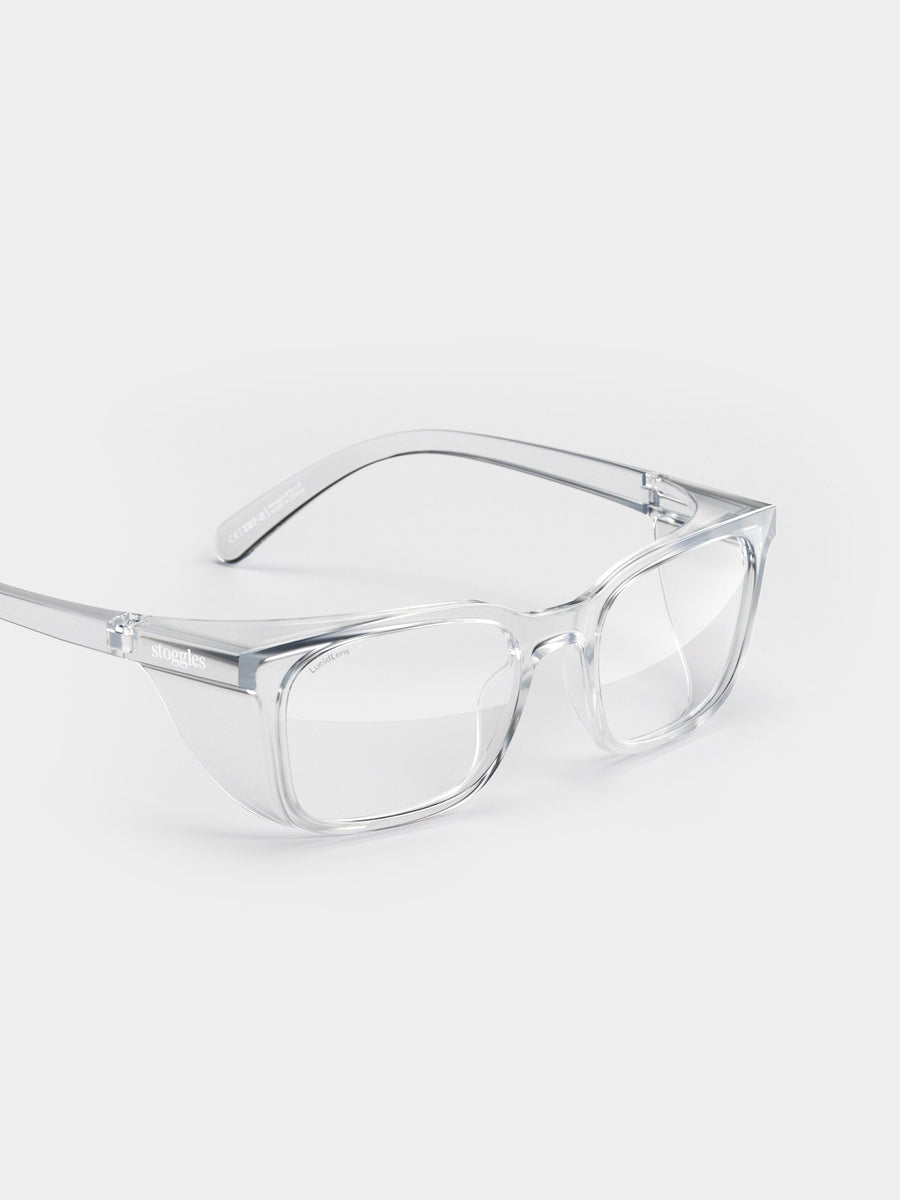
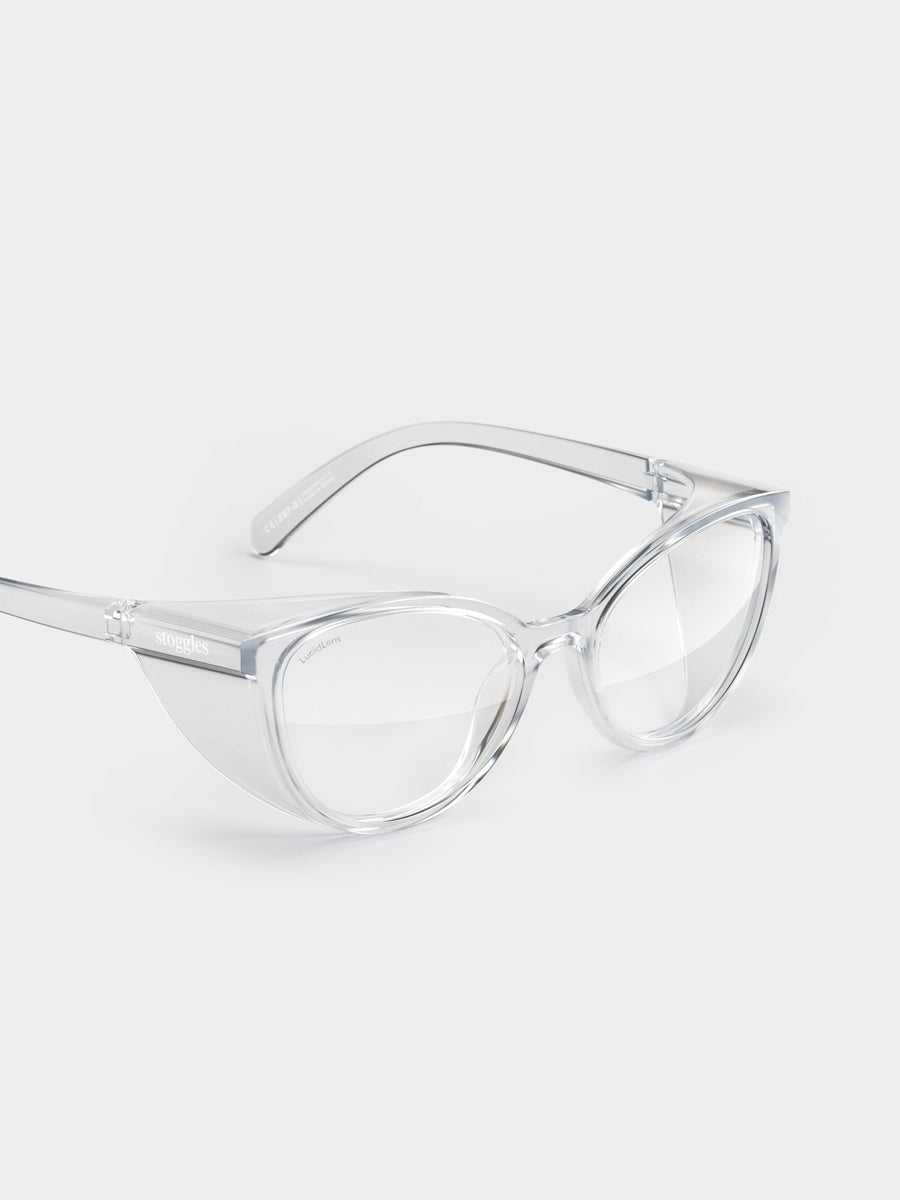
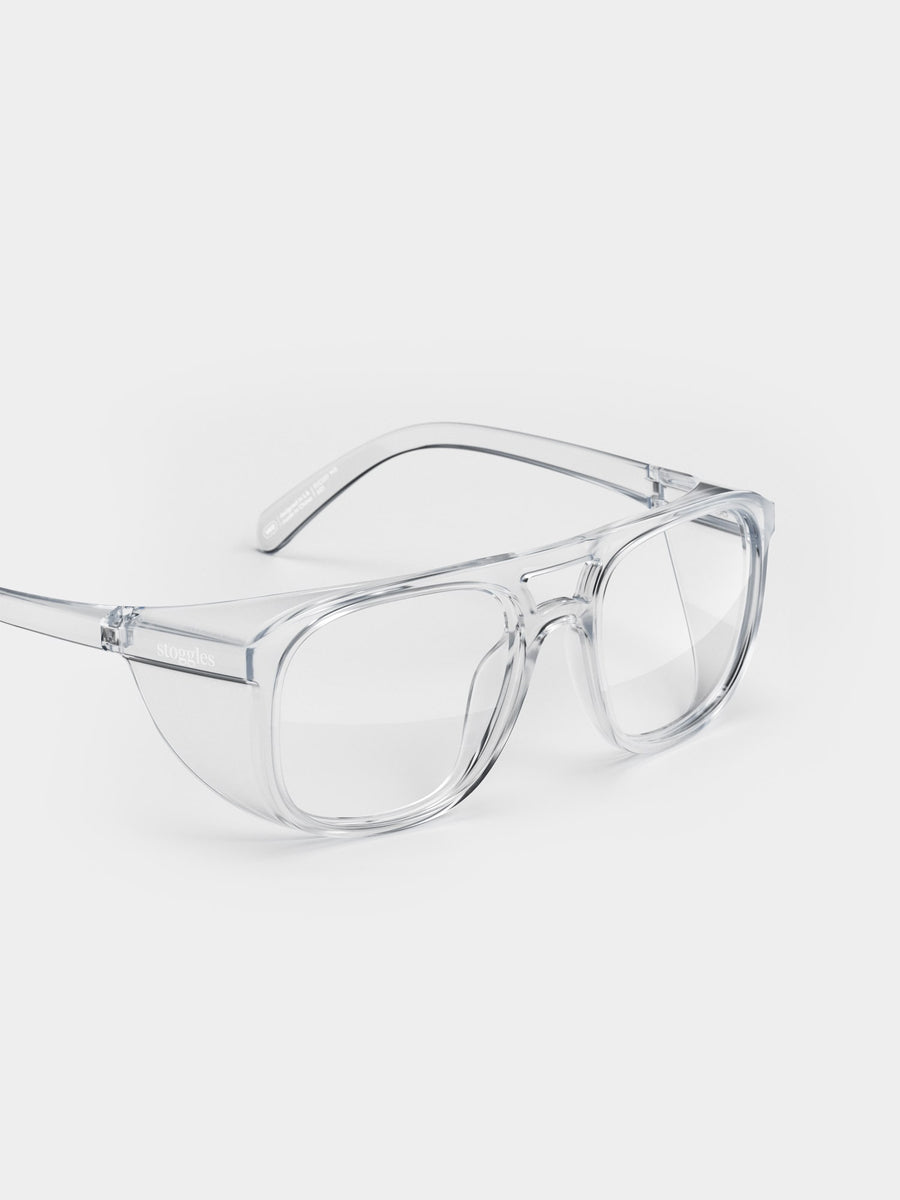
Standard prescription glasses correct vision. They don't protect it. Regular frames and lenses are not designed to withstand impacts, flying debris, or chemical splashes, and they carry no formal safety certification. ANSI Z87.1-2020 defines what safety eyewear must do. Certified lenses must pass high-velocity impact tests, and certified frames must include top and side shields to block hazards from multiple angles.
The people who need this combination most include nurses, lab technicians, construction workers, and DIYers. A lot of workplace eye injuries occur in the U.S. every year, and roughly 90% of them are preventable with proper protective eyewear. For people with prescriptions, the old workaround was to stack bulky safety goggles over their glasses, which caused fogging, discomfort, and reduced peripheral vision.
Prescription safety glasses solve that entirely. They correct vision and meet ANSI Z87.1-2020 certification in a single pair. No layering, no compromises.
How to Know Which Corrective Lens Type Is Right for You

Start with a current, accurate prescription from an eye care professional. Prescriptions change, and outdated lenses cause strain regardless of how well the frames fit. From there, your lifestyle shapes the decision. A nurse working long clinical shifts needs different lenses than someone who mostly works at a desk.
Think through your job hazards, hobbies, screen time, and how much time you spend outdoors. Polycarbonate lenses are the smart default for anyone in an active or higher-risk setting. Before ordering, ask your eye doctor about material recommendations for your prescription strength, whether coatings like anti-fog or blue light filtering make sense for your situation, and whether your workplace requires ANSI certification.
FAQs
What conditions do corrective lenses fix?
They correct nearsightedness, farsightedness, astigmatism, and presbyopia by focusing light precisely on the retina.
Can I wear contact lenses in dusty or chemical-heavy work environments?
Not safely. Debris can get trapped under lenses, and certain chemicals can be absorbed by soft lens material, so contacts alone are a poor fit for those settings.
Do standard prescription glasses protect my eyes at work?
No. Regular glasses correct vision but carry no safety certification. You need ANSI Z87.1-2020 certified prescription safety glasses for impact and debris protection.
See Clearly, Stay Protected
Corrective lenses should do more than sharpen your vision when your environment demands protection, too. If you work around debris, splashes, dust, tools, patients, screens, or unpredictable daily hazards, standard prescription glasses are not enough. Stoggles bring vision correction and safety together in one pair, with ANSI Z87.1-certified impact protection, built-in side and top shields, anti-fog performance, UV and blue light protection, and prescription-ready frames that look good enough to wear all day.
Make clear vision safer, easier, and more comfortable by choosing Stoggles prescription safety glasses.