

ou're mid-task, hands busy, and your lenses fog over completely. You grab the nearest fabric, a shirttail, a paper towel, whatever's close, and wipe. Vision restored. Except that quick fix is also quietly stripping the coating that keeps your lenses clear in the first place.
Anti-fog coatings do real work. They prevent condensation from settling on the lens surface by changing how moisture interacts with the material. Treat them right and they last. Treat them like ordinary glass, and they degrade faster than you'd think. Here are the tools you need, how to use them, and which habits to drop.
Why Your Cleaning Method Actually Matters
An anti-fog coating is a thin chemical layer bonded to the lens surface. It works well, but it's not indestructible. Rough materials, harsh chemicals, or even dry wiping wear it down gradually. You won't see the damage after one bad wipe. You'll see it after fifty.
This goes beyond comfort. Foggy lenses cause people to pull their safety glasses off mid-task or shove them up on their forehead, and that's exactly when accidents happen. Around 800,000 eye injuries occur in the U.S. every year, and the vast majority are preventable with eyewear worn consistently. Keeping your lenses clean and functional is part of that.
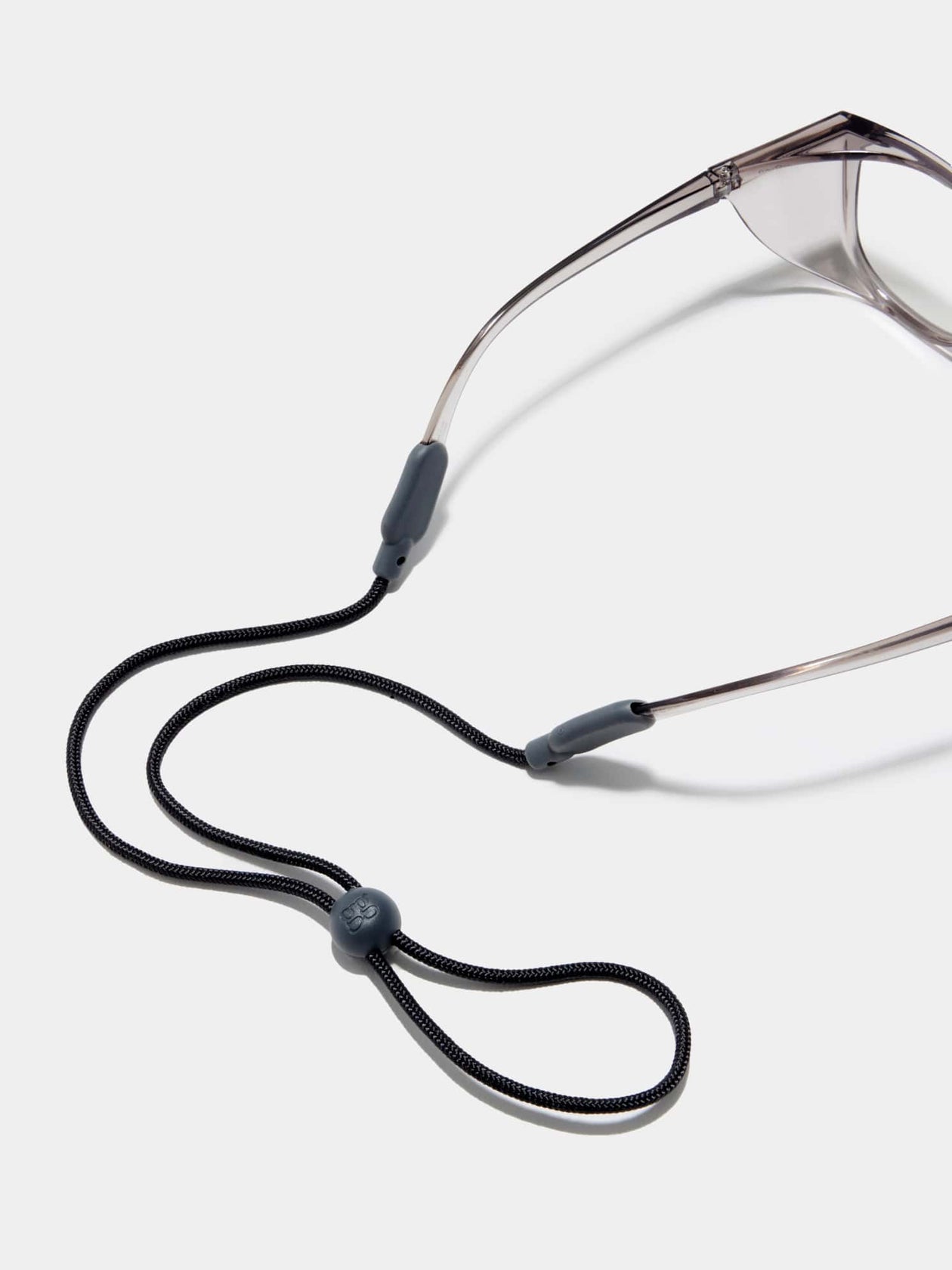
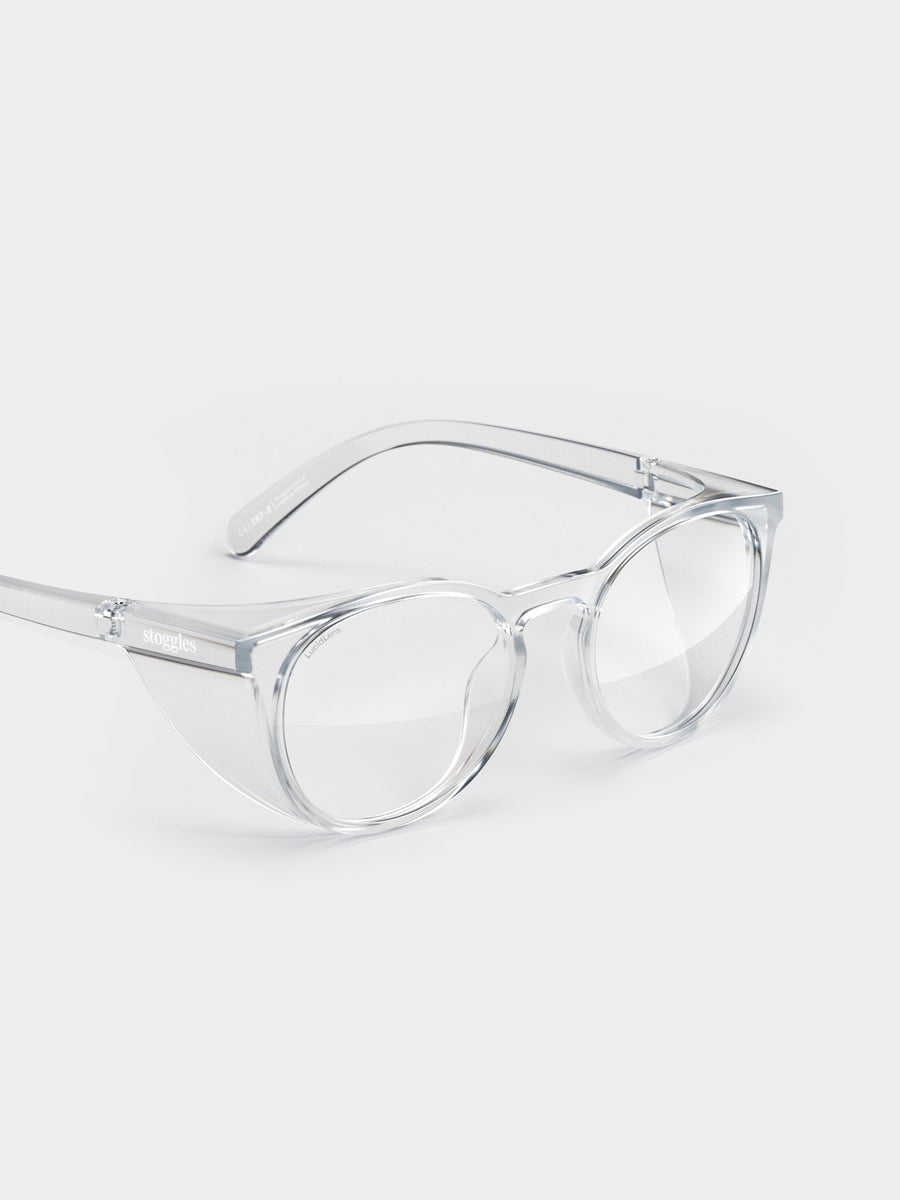
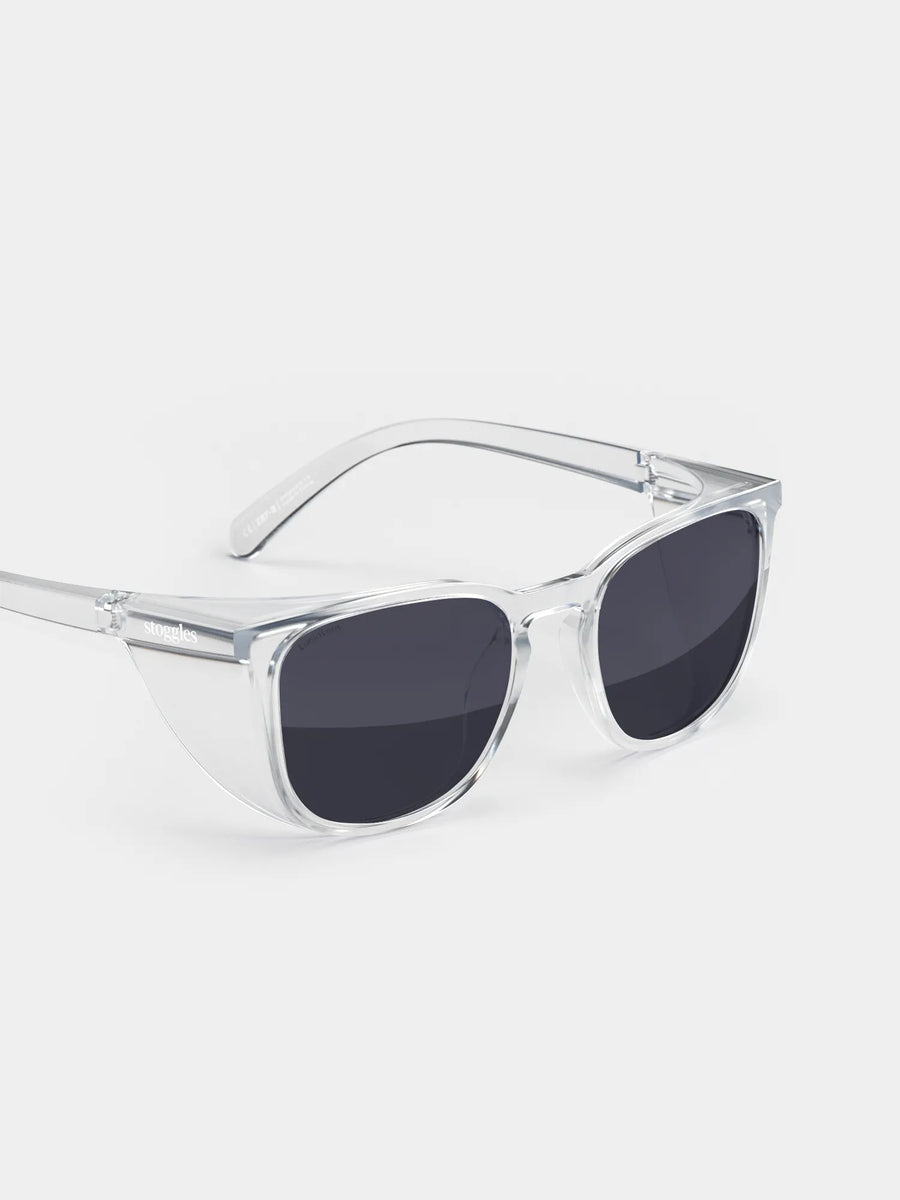
What You'll Need Before You Start
The right supplies are what separate a cleaning routine that protects your coating from one that destroys it. Before you touch your lenses, gather these:
-
A clean microfiber cloth, the only safe option for wiping lenses
-
Lens-safe cleaning spray or a small drop of mild dish soap
-
Lukewarm water for rinsing
Skip the paper towels. Skip the shirt. Skip anything labeled glass cleaner, alcohol wipe, or all-purpose cleaner. Those materials either scratch the lens surface or chemically break down the coating. A microfiber cloth for glasses is not a nice-to-have here. It's the whole point.
How to Clean Safety Glasses the Right Way

Cleaning safety glasses sounds simple until the wrong wipe, spray, or shortcut starts wearing down the coating.
Step 1: Rinse First, Wipe Second
Hold your glasses under lukewarm water before anything else. This loosens dust, grit, and debris sitting on the lens. Skip the rinse and go straight to wiping, and you're dragging those particles across the coating. That's how micro-scratches form, and they accumulate fast.
Step 2: Apply a Safe Cleaning Solution
One drop of mild dish soap or a quick spray of lens-safe cleaner is all you need. Work it across both lenses gently with your fingertips. Avoid anything with alcohol, ammonia, or acetone. Those chemicals dissolve the anti-fog coating directly, and even one use can cause noticeable damage. This is not a rule to bend.
Step 3: Wipe with a Microfiber Cloth
Use a clean, dry microfiber cloth with light pressure and a gentle circular motion. Heavy pressure doesn't clean better. It adds stress to the coating. Also make sure the cloth itself is actually clean. A microfiber cloth that's been sitting loose in a toolbox picks up grit and behaves just like rough fabric would.
Step 4: Rinse and Air Dry
Give the lenses a final rinse to remove any soap residue, then let them air-dry. Set them lens-side up on a clean surface, or gently shake off the excess water. Rubbing them dry right after rinsing adds friction when the coating is most exposed. Air drying takes one extra minute and costs nothing.
The safest method is gentle, quick, and built around one rule: remove debris before anything touches the lens.
Mistakes That Quietly Kill Your Anti-Fog Coating
Most coating damage isn'tcaused by a single dramatic incident. It builds from small repeated habits that seem harmless. Stop doing these:
-
Wiping dry lenses with paper towels, tissues, or rough fabric.
-
Using household glass cleaner, alcohol wipes, or disinfectant spray.
-
Storing glasses face-down on hard surfaces or loose inside a bag.
-
Breathing on the lens and wiping, which deposits oils that smear rather than clean.
That last one is worth calling out. Breathing on a lens and wiping it feel productive but leave an oily film behind. Add a rough wipe, and you've done more damage than cleaning in under five seconds.
How to Store Safety Glasses So the Coating Lasts

Cleaning is only half the equation. How you store your glasses matters just as much. A hard case is the best option. It protects the lenses from contact with other surfaces and keeps them away from anything abrasive. A microfiber pouch works too, as long as it stays clean.
Keep glasses away from heat. Dashboards, window sills, and spots exposed to prolonged direct sunlight all degrade coatings over time, even without physical contact. Heat is a quiet coating killer that most people never think about.
FAQs
What is the safe way to clean safety glasses with an anti-fog coating?
Rinse with lukewarm water first, apply a drop of mild dish soap or a lens-safe spray, wipe gently with a clean microfiber cloth, then rinse and air-dry.
What should I never use to clean anti-fog lenses?
Paper towels, tissues, clothing, and anything with alcohol, ammonia, or acetone. These scratch the surface or chemically break down the coating, sometimes in a single use.
Does breathing on lenses before wiping damage them?
It does more harm than good. Breathing deposits an oily film that smears rather than cleans, and pairing it with a rough wipe quickly wears down the coating.
Keep Your Lenses Clear for the Work Ahead
A good cleaning routine protects your anti-fog coating, but the right eyewear makes that routine worth it. Safety glasses should stay clear, comfortable, and ready when the job gets messy, humid, fast-paced, or unpredictable. Stoggles are built with anti-fog-coated lenses, ANSI Z87.1-certified impact protection, blue-light blocking, side and top shields, and 100% UV-blocking lenses, so you do not constantly have to choose among clarity, safety, and style.
Clean them the right way, store them properly, and when it is time for eyewear that can keep up with your day, choose Stoggles safety glasses.