
Why Your Safety Glasses Give You Headaches (And How to Fix It)

At the end of a long shift, you take off your safety glasses and feel that familiar, dull pressure radiating across your temples. It happens so consistently that it starts to feel normal. It isn’t. Headaches are not part of the job, and they’re certainly not something you should have to earn at the end of every workday. While headaches caused by safety glasses are surprisingly common, they’re also highly preventable once you understand what’s actually causing them.
In this blog, we break down why safety glasses can cause headaches, from poor fit and eye strain to fogging and prescription issues, and how to fix the discomfort before it affects your workday.
The Real Reasons Safety Glasses Cause Headaches
Most people assume there’s a single culprit. Usually, they blame the glasses for being too tight or simply too cheap. The reality is more complicated. Poor frame fit, optical distortion, low-quality lenses, and pressure points on the nose or temples can all contribute to the problem simultaneously. A minor annoyance at 7 a.m. can become a major source of discomfort by 3 p.m. That’s because discomfort compounds. Your facial muscles begin to compensate. You squint without realizing it. You push the glasses back up your nose for the twentieth time. Small adjustments turn into constant strain. By the end of the shift, that small irritation has become a full-blown headache.
The answer to "Can safety glasses cause headaches?" Yes, they absolutely can. The better question is which of these causes is hitting you the hardest, because each one has a direct fix.
Frame Fit: The Biggest Offender
A frame that is too narrow squeezes the temporal muscles and restricts blood flow. A frame that sits too loosely shifts constantly, so your eyes are constantly making tiny adjustments to compensate for a moving lens. Both scenarios end the same way: a headache that builds from the sides of your head inward.
Most safety glasses sold in hardware stores and workplace catalogs are designed on a one-size-fits-all basis. That approach fails for the majority of faces because faces are not one-size-fits-all. Some signs that fit is your main problem: pressure marks on your nose or temples after wearing glasses that migrate down your face during physical work, and headaches that start at the temples rather than behind the eyes. If you recognize those, the frame is the first thing to address.
Lens Problems That Strain Your Eyes

Low-quality lenses introduce subtle optical distortion, and your visual system spends the entire day trying to correct for it. That constant effort is exhausting in a way that feels like a headache, because it essentially is one. Even minor distortion across a full shift adds up to real pain.
Fogged lenses create a different kind of strain. Squinting through a haze for hours tenses the muscles around your eyes and forehead. Unprotected lenses in screen-heavy environments add another layer entirely. The American Optometric Association links blue light exposure to digital eye strain, fatigue, and headaches, and safety glasses without blue-light protection offer no defense against them. So if your job involves both physical hazards and a computer screen, your lenses may be failing you on two fronts at once.
Why Prescription Wearers Have It Worse
Layering safety goggles over prescription glasses is asking your visual system to do something it was never really designed to do. The optical centers of your corrective lenses and the goggles rarely align perfectly, forcing your eyes to spend the entire shift compensating for that subtle misalignment. Combine that with the added weight on the bridge of the nose, increased pressure around the temples, and frame edges encroaching on your peripheral vision, and it becomes easy to see why headaches are so common among workers who rely on this setup.
Prescription safety glasses eliminate these problems entirely. A single pair of ANSI Z87.1-2020-certified lenses, customized to your exact prescription, provides both the vision correction you need and the protection your job demands. No layering. No optical misalignment. No competing frames. And no extra weight pressing on your nose and temples throughout the day. The result is a clearer vision, greater comfort, and one less source of fatigue during a long shift.
How to Fix the Headache: Five Practical Moves
Fixing safety glasses headaches usually starts with removing the source of strain. Small changes in fit, lens type, frame weight, and daily habits can make the glasses feel much easier to wear.
1. Get a Proper Fit
Look for frames that offer adjustable nose pads, flexible temple arms, and multiple size and width options. Proper fit matters just as much as protection. A well-fitted frame should sit comfortably on the bridge of your nose without pinching, rest securely at the temples without excessive pressure, and position your eyes near the optical center of each lens. When all three are aligned, the glasses feel more comfortable, provide clearer vision, and are far less likely to contribute to fatigue or headaches over the course of a long workday.
2. Switch to Prescription Safety Glasses If You Need Them
Prescription safety glasses address visual strain at its source. Lenses tailored to your exact prescription allow your eyes to focus naturally, reducing the effort and fatigue that can build over a long shift. Just as importantly, look for ANSI Z87.1-2020 certification. This ensures the eyewear meets rigorous impact-protection standards, giving you the vision correction you need and the safety your work environment demands, all in a single pair of glasses.
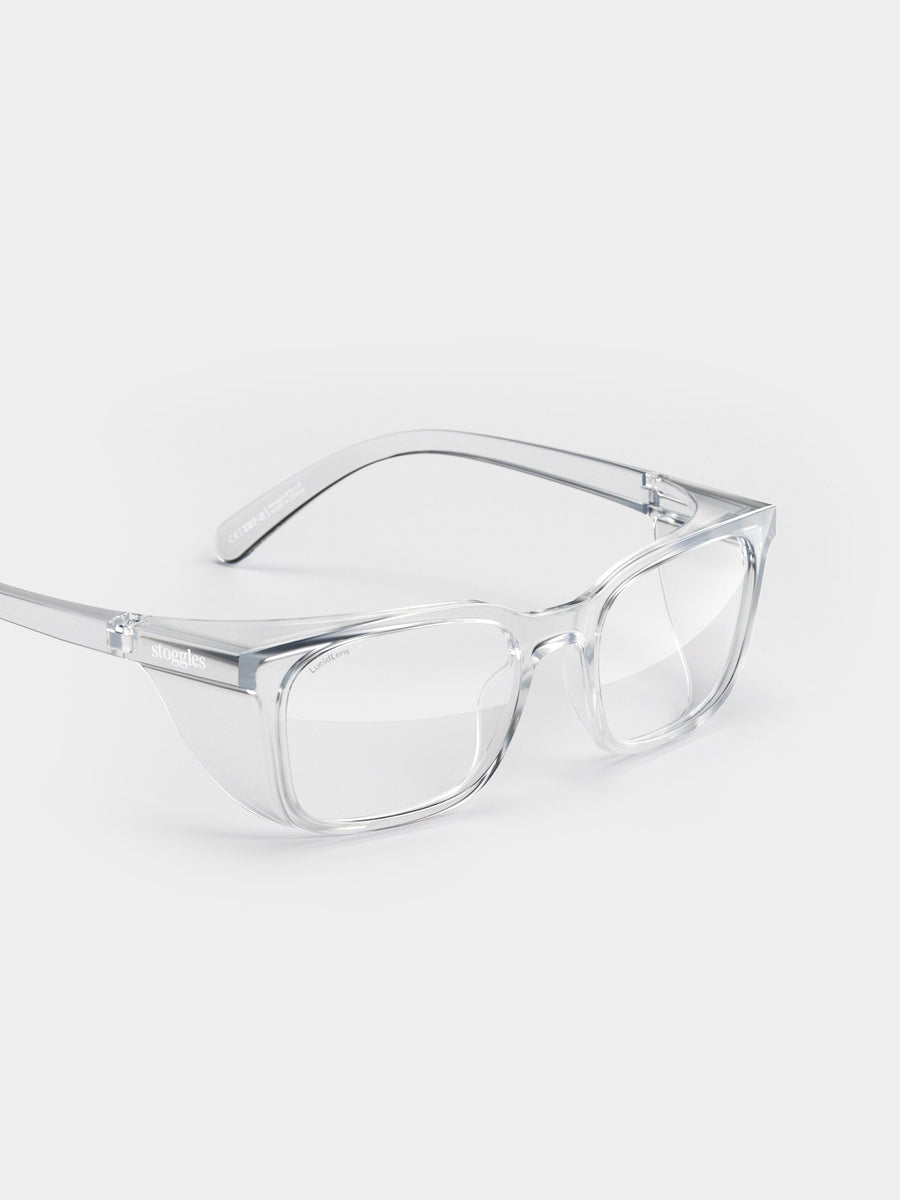
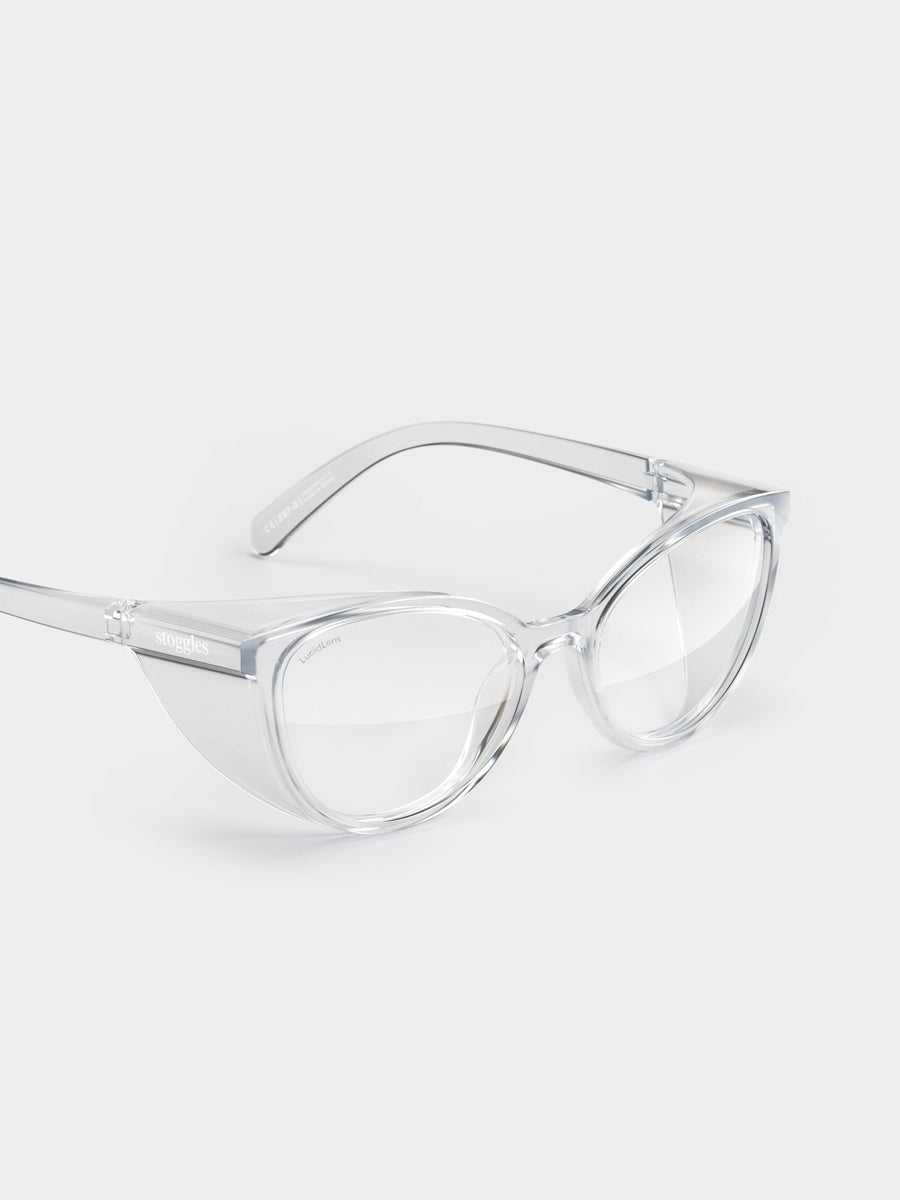
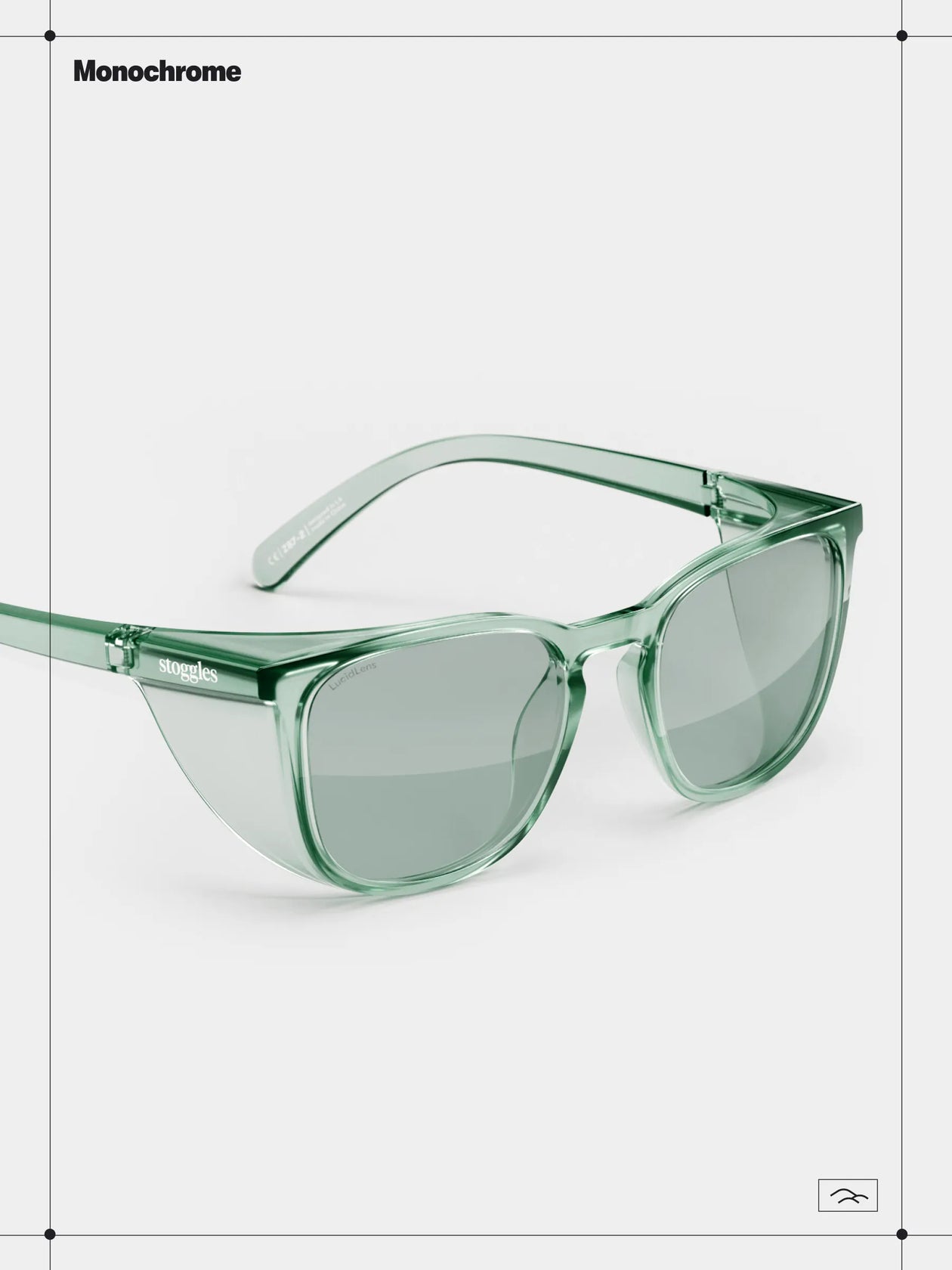
We built Stoggles prescription safety glasses around exactly this need, combining certified protection with corrective lenses in a frame designed for all-day wear.
3. Choose Lightweight Frames
Frame weight is easy to overlook during a quick fitting, but it can make a significant difference over the course of a full shift. Heavier frames place more constant pressure on the nose and temples, increasing the likelihood of discomfort, fatigue, and headaches as the day goes on. Polycarbonate and TR90 nylon frames provide solid impact resistance while weighing a fraction as much as older acetate or metal designs. Less pressure on the nose and temples throughout the day means less discomfort and a lower likelihood of headaches by the end of the shift, a simple trade-off worth making.
4. Look for Anti-Fog and Blue Light Lenses
Anti-fog coating keeps lenses clear, so squinting through haze never becomes your default mode. Built-in blue light protection can also be beneficial for workers who spend part of their day in front of screen. Neither feature is about having fancy glasses. They are practical tools designed to reduce strain, improve comfort, and help you finish a shift feeling better than you started it.
5. Take Regular Breaks
The AOA recommends the 20-20-20 rule: every 20 minutes, look at something 20 feet away for 20 seconds. This matters for safety eyewear users in visually demanding or screen-heavy environments. If breaks help noticeably, eye strain is part of what you are dealing with. If the headache persists even with regular breaks, the glasses need a closer look.
If your safety glasses still cause headaches after these adjustments, do not ignore them. Persistent discomfort usually means the fit, lens strength, or frame design needs to be rechecked before it affects your workday.
When to Stop Adjusting and Just Replace Your Glasses
Sometimes the culprit is not the fit or the prescription, but the age of the eyewear itself. Even minor scratches can scatter light and reduce optical clarity, increasing eye strain over the course of a long day. Warped frames no longer sit symmetrically on your face, which means uneven pressure and a headache that no amount of nose pad adjustment will fix. Under regular use, safety glasses typically need replacement every 1 to 3 years, and sooner if the lenses show visible scratches or the frame has taken a hard impact.
If fit and lens quality are no longer the issue, yet headaches persist, your safety glasses may have reached the end of their effective lifespan. Replacing them is less an expense than a necessary investment in comfort, clarity, and protection.
Stop Letting Safety Glasses Hurt

The best safety glasses do more than protect your eyes. They provide that protection without causing unnecessary pressure, eye strain, or end-of-shift headaches. If your current pair feels too tight, too heavy, foggy, distorted, or uncomfortable to wear all day, it is time to choose eyewear built for real use.
Stoggles combines ANSI Z87.1-certified protection, lightweight frames, anti-fog lenses, blue-light protection, and prescription-compatible options in designs made for long shifts, not quick try-ons. For help finding the right fit, contact the Stoggles team.