

Picture this: At the end of a long shift, you set your safety glasses face-down on the workbench. Sometime during the night, a wrench slides across them, dust and grit get trapped underneath, and by morning, the lenses have earned a new collection of scratches. It doesn’t seem like a big deal. After all, they’re just a few marks on the surface. But that small habit, repeated over weeks and months, quietly damages the very lenses meant to protect your eyes, turning minor wear into a gradual loss of clarity, comfort, and protection. Proper storage is what separates safety glasses that last months from ones that need replacing every few weeks.
This blog covers the best storage options, the mistakes most people don't realize they're making, and the small daily habits that keep protective eyewear doing its job.
Why Storage Matters More Than You Think
Every careless toss takes a toll. Scratches, surface cracks, and coating damage build up fast when glasses land face-down on rough surfaces or rattle around loose in a toolbox. What looks like a cosmetic issue is actually a functional one. ANSI Z87.1-2020 certifies safety eyewear for impact resistance in its original, intact condition. A deeply scratched or cracked lens no longer meets that standard, which means the protection you assume you have is not the protection you are actually getting.
There is a real financial cost here, too. A quality pair of safety glasses, especially prescription ones, is a meaningful investment. Replacing them every year because of preventable storage damage adds up quickly. Treat storage as part of the gear, and that investment pays off for years instead of months.
The Best Places to Store Safety Glasses
The right storage option depends on where you work. Hard-shell cases offer the most protection against impact and compression. They are the best choice for glasses traveling in bags, toolboxes, or vehicles. Soft microfiber pouches work well for desk drawers or home storage where heavy objects are unlikely to land on top. They also double as a cleaning cloth, which makes them genuinely practical.
In workshops and on job sites, wall-mounted holders and pegboard hooks are hard to beat. They keep glasses off flat surfaces, visible, and easy to grab. In office and lab settings, a dedicated drawer organizer keeps glasses separate from other items that can cause scratching. The rule that applies everywhere: glasses that are easy to reach are the ones that are actually worn.
What to Avoid When Storing Safety Glasses
Face-down storage is the most common and most damaging habit out there. Lenses pressed against any hard surface collect micro-scratches that compound over time. A few other storage mistakes cause serious, often irreversible damage:
-
Leaving glasses in a hot car or on a sunlit dashboard, where heat warps polycarbonate frames and degrades lens coatings.
-
Tossing glasses loose in a toolbox, bag, or pocket where they knock against tools, keys, and hardware.
-
Stacking heavy objects on top of stored eyewear can stress hinges and crack frames.
-
Storing wet glasses in a sealed case traps moisture and speeds up coating breakdown.
Most storage damage is easy to prevent once you know its causes. Keep the lenses away from hard surfaces, give the frames room, and let the glasses dry fully before they go back into a case.
Clean Before You Store, Every Time

Storing dirty lenses worsens the damage. Dust particles, chemical residue, and debris act like sandpaper the moment a lens presses against a surface or cloth. Cleaning before storage protects the lens surface from further abrasion while the glasses sit unused. It takes about thirty seconds and saves real money over time.
For polycarbonate lenses with anti-fog or UV coatings, the cleaning method matters as much as the habit itself. Use a lens-safe spray and a microfiber cloth. Paper towels feel soft but contain wood fibers that scratch the coatings. Shirt hems carry oils and particles that smear and scratch. Household glass cleaners, especially those with ammonia, permanently strip anti-fog and UV coatings. Keep a small bottle of lens spray and a dedicated microfiber cloth right next to the case, and the habit becomes automatic.
Temperature, Humidity, and Environment
Heat is one of the biggest threats to the longevity of safety eyewear. Temperatures inside a parked car on a warm day can exceed 130°F, which is more than enough to warp polycarbonate frames and break down anti-fog coatings. Once a frame warps, it no longer sits flush against the face, and that gap compromises the top and side shield coverage that ANSI Z87.1-certified glasses are built to provide.
Humidity creates a different problem. Moisture trapped inside a sealed case, especially when glasses get wet after washing, encourages coating breakdown over time. The ideal storage environment is cool, dry, and protected from direct UV exposure. A desk drawer, shaded shelf, or garage cabinet away from windows checks all three boxes and helps extend the life of your eyewear.
Storage Habits for Different Settings
Where you store your safety glasses matters almost as much as how you clean them. The easier they are to find, the more likely they are to be worn when protection actually matters.
On the Job Site or in the Workshop
Wall-mounted holders and pegboard hooks work best in these environments. Keeping glasses within arm's reach of the work area removes the friction that leads people to skip wearing them. In shared workspaces, labeling storage spots prevents glasses from getting mixed up or going missing across a crew.
In a Medical or Lab Setting
Individual hard-shell cases for each user prevent cross-contamination between wearers. Positioning storage near entry points, at the lab door or the start of a clinical hallway, supports compliance without turning it into an extra step anyone has to think about.
At Home for DIY or Yard Work
A small case in the tool drawer or on a garage shelf keeps glasses protected between projects. The most effective habit here is proximity: keep glasses near the task. Near the mower, near the drill, near the workbench. When they're right there, reaching for them stops being a decision.
Good storage keeps safety glasses protected, visible, and close to the work. That simple habit helps extend their lives and makes eye protection part of the routine rather than an afterthought.
How to Know When Storage Hasn't Been Enough
Even with good habits, safety glasses wear out. These are the signs it's time to replace a pair rather than keep using it:
-
Visible deep scratches or cracks on lenses, which compromise impact resistance under ANSI Z87.1 standards.
-
Peeling or flaking coatings signal that the anti-fog or UV layer has broken down.
-
Frames that no longer sit flush on the face or feel loose at the hinges.
-
Persistent fogging that won't clear is often a reliable sign that the anti-fog coating has worn away and is no longer performing as intended.
When any of these show up, better storage is no longer the answer. The glasses need to be replaced.
The Stoggles Advantage: Built to Last When You Store Them Right

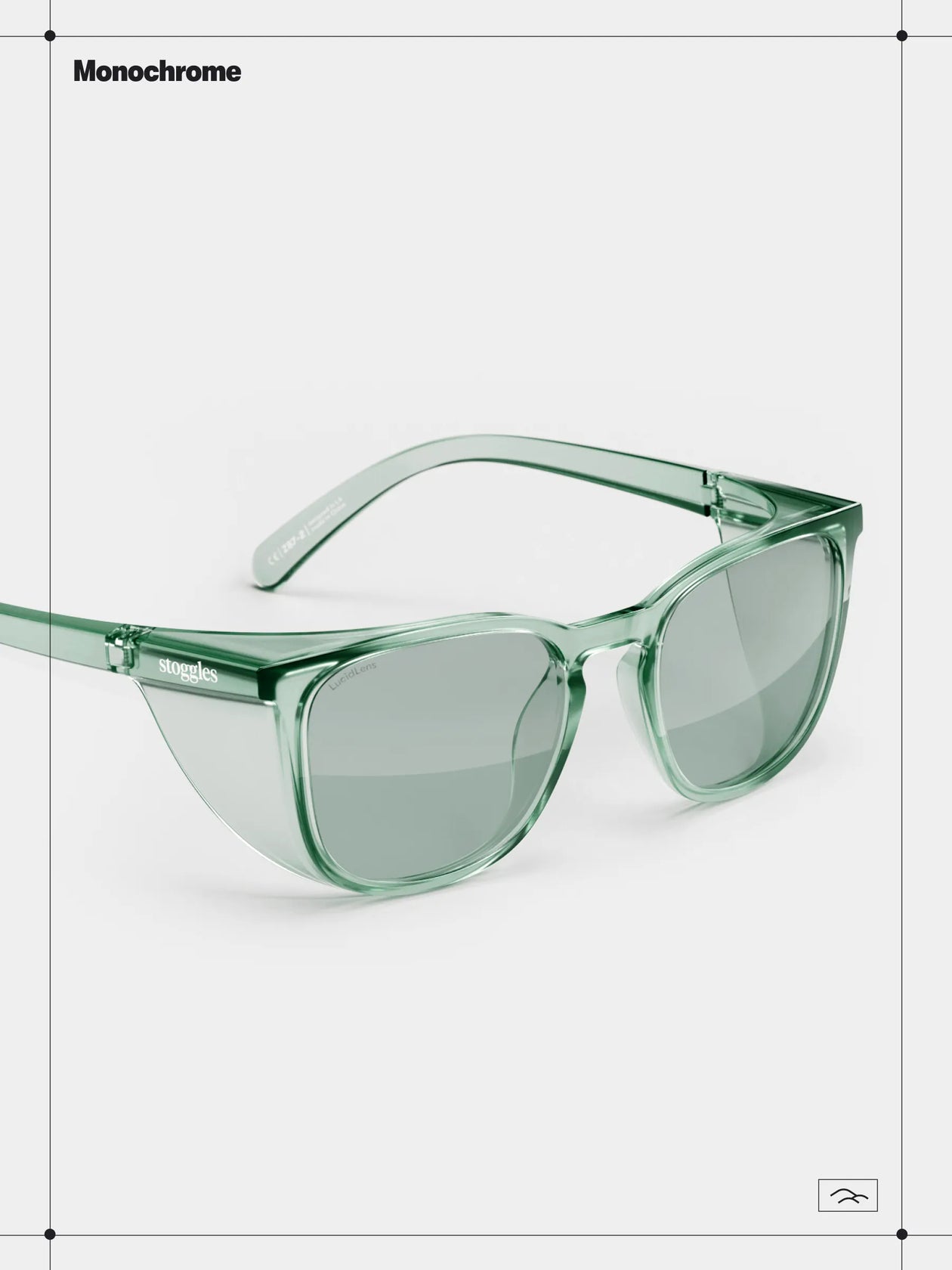
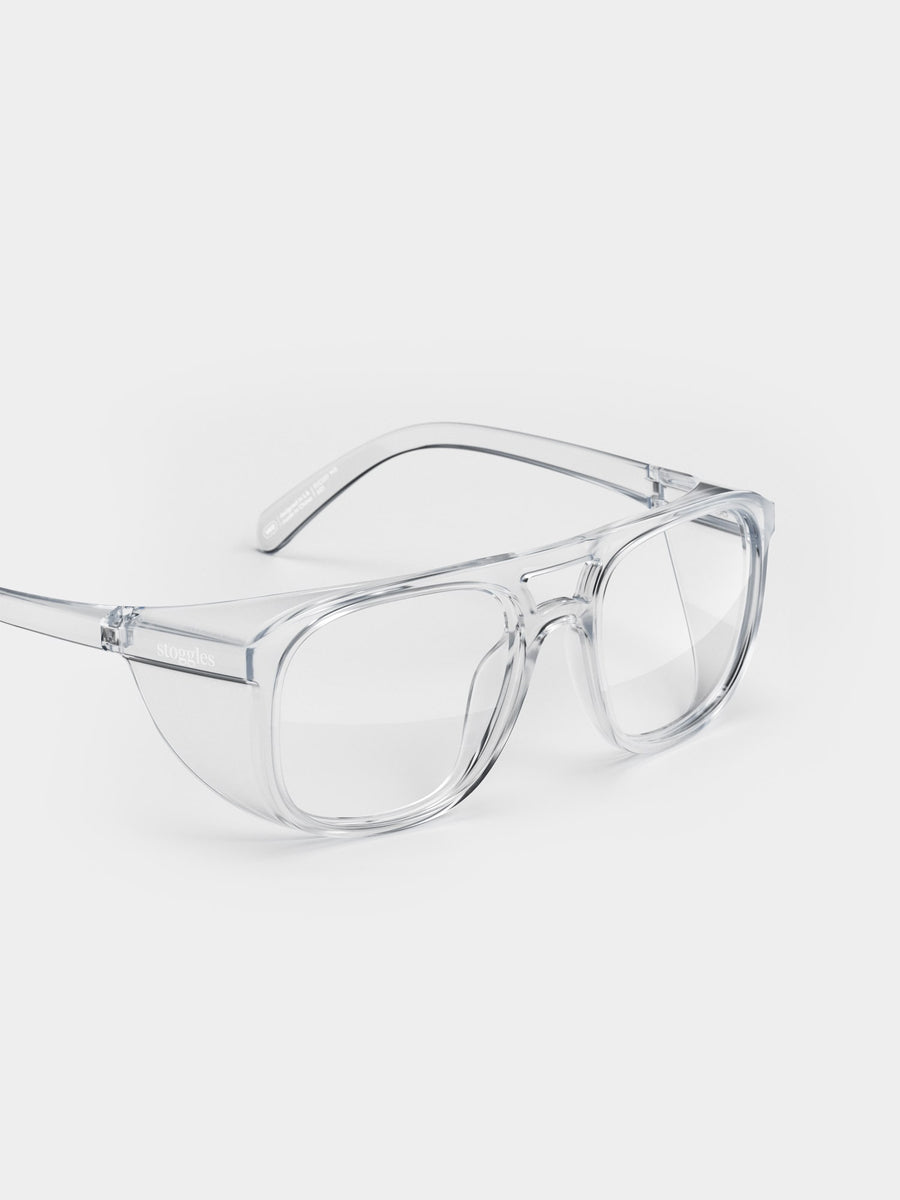
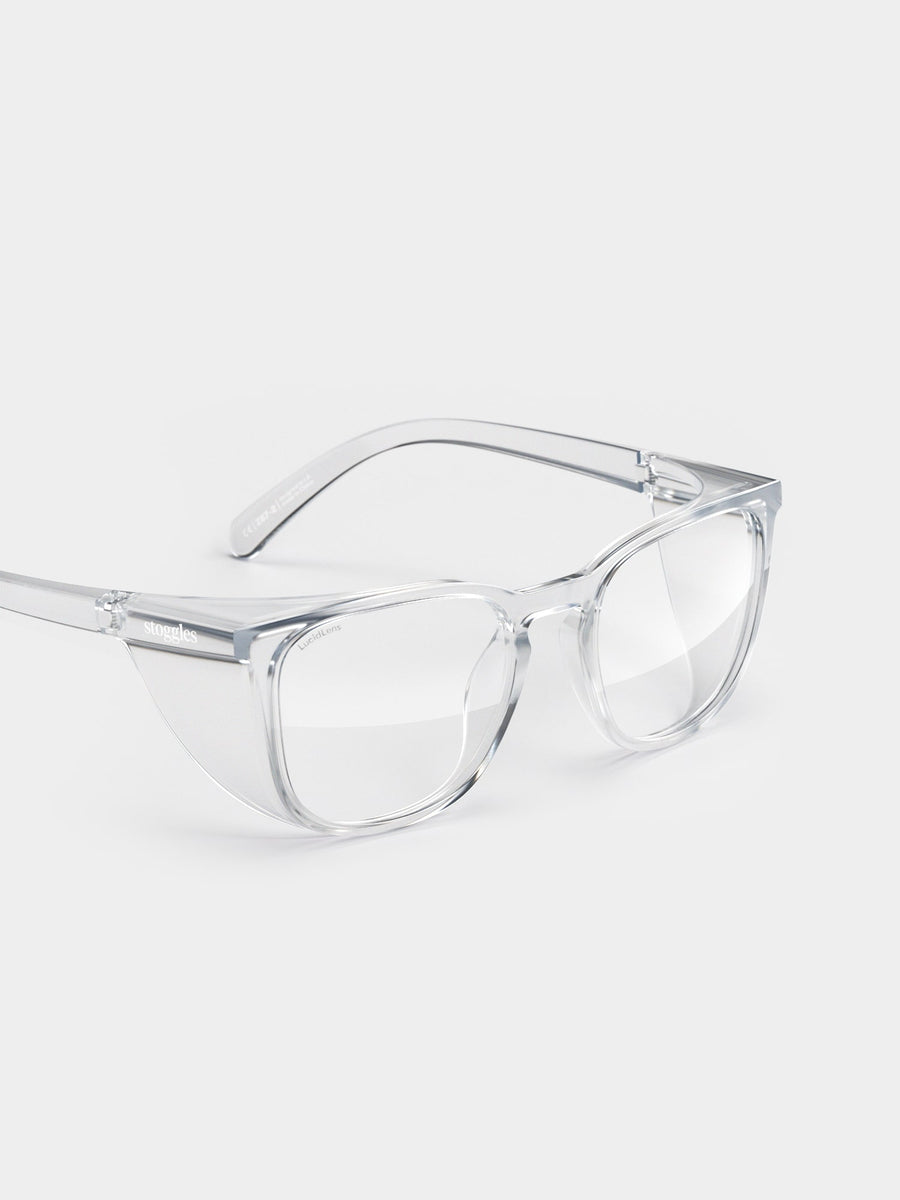
We build Stoggles with polycarbonate lenses and durable coatings that hold up when you take care of them. The anti-fog treatment, UV protection, and blue light filtering we build into every lens are designed to last, but only when the glasses are cleaned properly and stored well between uses. Our frames are constructed to maintain their shape through years of regular wear, and we offer cases and accessories that make good storage habits the easy default rather than the extra effort.
Good storage is the simplest form of maintenance any pair of safety glasses can get. Clean them before they go away, put them in a case or on a hook, and keep them out of the heat. Those small habits add years to a pair that might otherwise get tossed far too soon.
Make Your Safety Glasses Last Longer
Safety glasses can only protect you if the lenses, coatings, and frames stay in good condition. Stoggles are built for daily wear with durable frames, polycarbonate lenses, anti-fog protection, UV defense, and accessories that make proper storage easier. Protect the pair that protects your eyes, and for help choosing the right eyewear or storage option, contact the Stoggles team.