
Can You Wear Contact Lenses and Safety Glasses Together?

You're at your workbench, contacts in, ready to start cutting. Someone tells you to grab your safety glasses. You pause: do you actually need those if you're already wearing contacts? The answer matters more than most people realize, and it's worth getting right before debris decides for you.
In this blog, we explain why contact lenses can be worn with safety glasses, the risks to watch for, and when prescription safety glasses may be the better choice.
Contacts Help You See Clearly, But They Do Not Protect Your Eyes
Yes, you can wear contacts and safety glasses together. But contacts alone are not eye protection, and no standard treats them as such. OSHA has clarified over the years that contact lenses are permitted in most hazardous workplaces, provided workers also wear appropriate protective eyewear. The lenses sitting on your cornea do not count as the protective layer.
This question comes up constantly among healthcare workers, lab technicians, construction crews, and weekend DIYers. People who rely on corrective lenses need to see clearly and stay protected, and contacts feel like the simpler path. That logic is understandable. The problem is that it skips the part where a flying particle or chemical splash reaches your eye with nothing real standing in the way.
What Contacts Actually Do (And Don't Do) for Your Eyes
Contact lenses sit directly on the cornea and correct your vision well. They form no barrier against impact, debris, dust, or chemicals. A piece of wood shaving or metal fragment does not slow down because you're wearing contacts. It reaches your eye the same way it would without corrective eyewear.
The risk gets more specific with chemicals and fine particles. Soft contact lenses are porous, meaning they can absorb airborne irritants and hold them against your cornea longer than if your eye were bare. Dust that slides under a lens is difficult to flush out, which significantly increases the risk of corneal abrasion and infection, turning a minor irritant into a real medical problem.
Yes, You Can Wear Contacts and Safety Glasses Together
No medical guideline or regulatory body bans contacts in hazardous environments. OSHA's position is clear: contact lenses are acceptable when the worker also wears properly fitted protective eyewear. The combination is valid, widely used, and genuinely effective when done correctly.
In practical terms, this pairing makes sense for people who move between environments throughout the day. A nurse wearing contacts during a long shift who needs splash protection for certain procedures, or a contractor who prefers contacts for comfort and uses certified safety glasses on site, is making a reasonable and compliant choice. The contacts handle vision. The safety glasses handle protection.
The Real Risks to Watch Out For

Even with proper safety glasses over contacts, a few hazards are worth knowing. Chemical splash is the most serious. If liquid gets into your eyewear, a contact lens can trap the irritant directly against the cornea, making flushing much harder. Fume and vapor exposure works similarly, since soft lenses can absorb airborne chemicals even without a direct splash.
-
Fine dust and particles can settle on soft lenses, causing irritation and increasing the risk of infection.
-
Dry, climate-controlled, or high-airflow environments accelerate lens dehydration during extended wear.
-
Heat and fume exposure in industrial settings can affect lens material and comfort.
-
Adjusting or touching lenses mid-task increases the risk of contamination.
None of these risks make contacts off-limits. They do make the case for wearing the best possible safety glasses over them, rather than settling for a loose or uncertified pair.
What Makes Safety Glasses Actually Safe Enough to Pair With Contacts
If you're wearing contacts in a hazardous environment, the safety glasses over them need to do serious work. ANSI Z87.1-2020 certification is the baseline. That standard covers impact resistance, lens coverage, and frame durability. Glasses without that certification are not safety glasses, regardless of what the packaging claims.
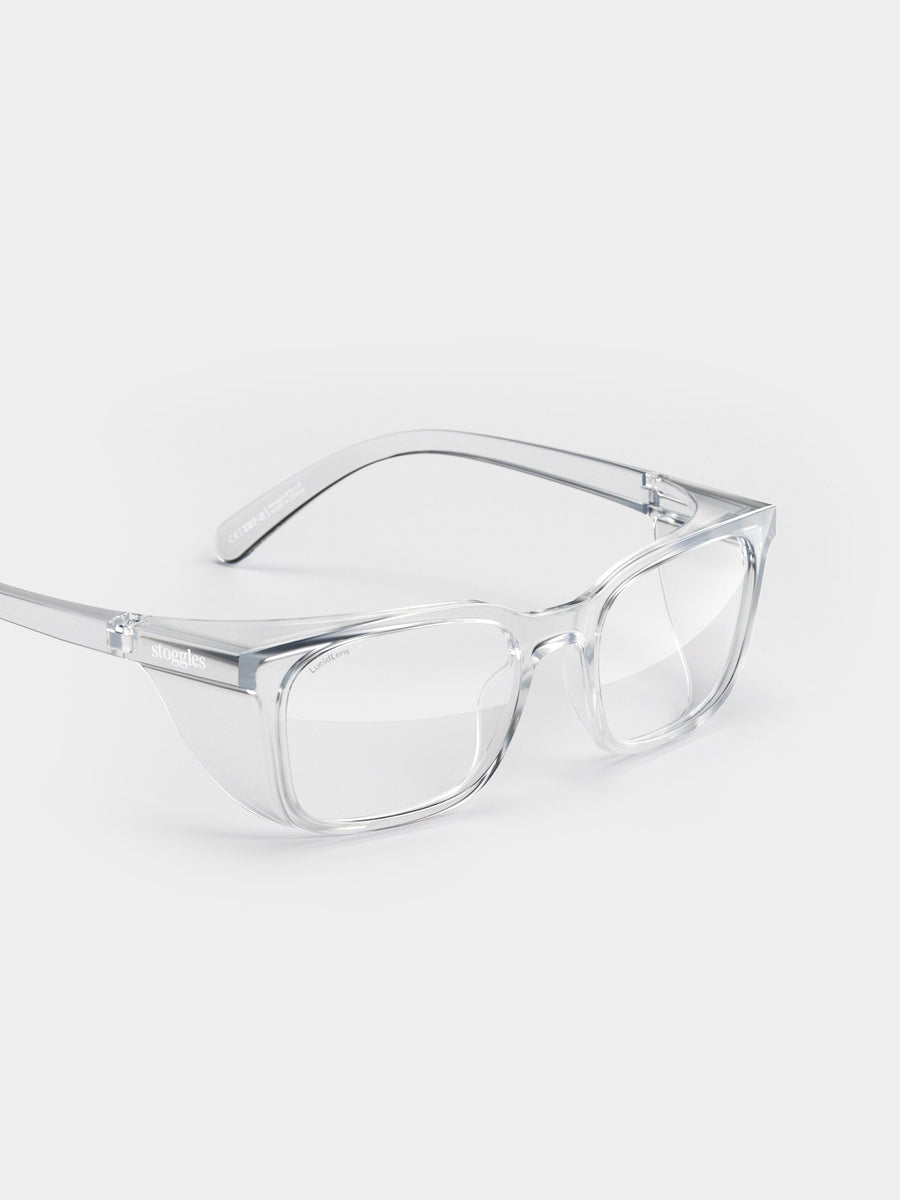
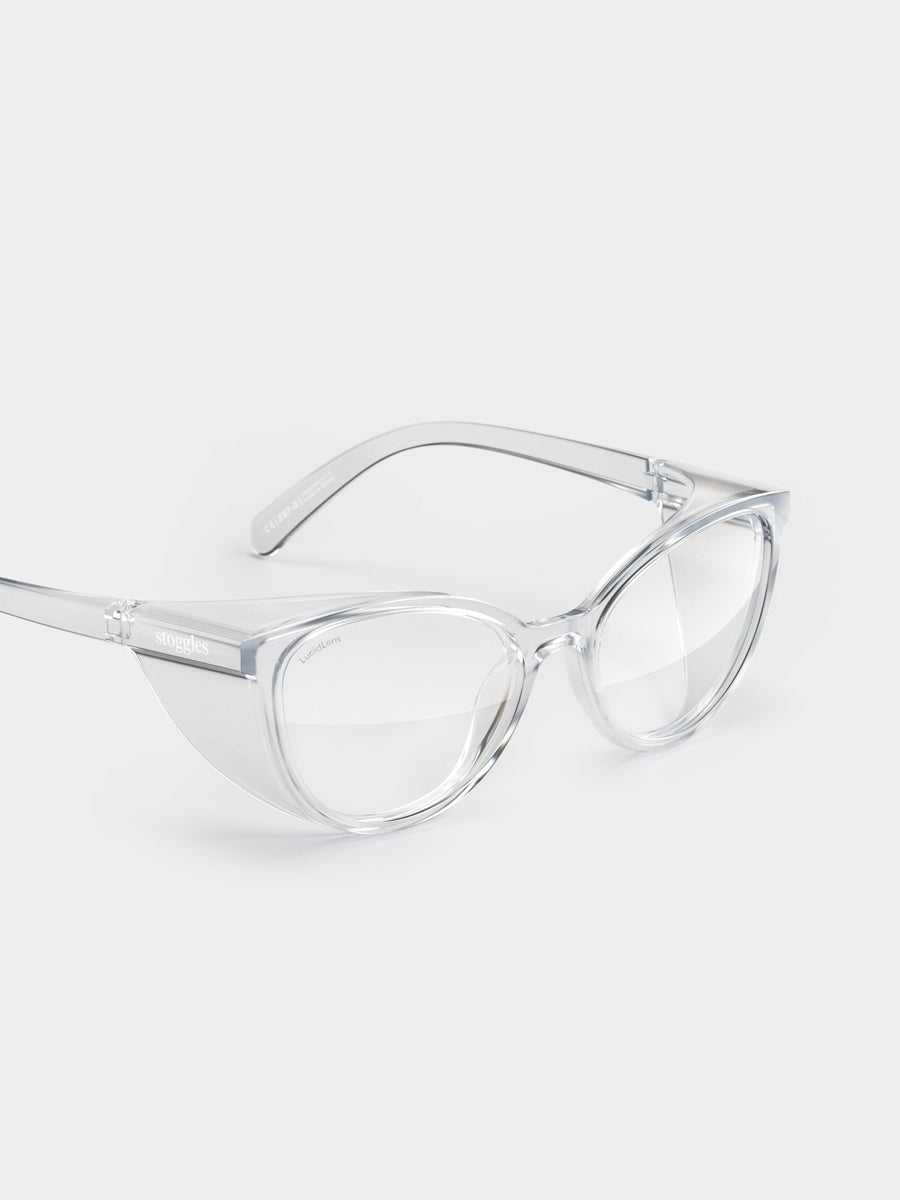
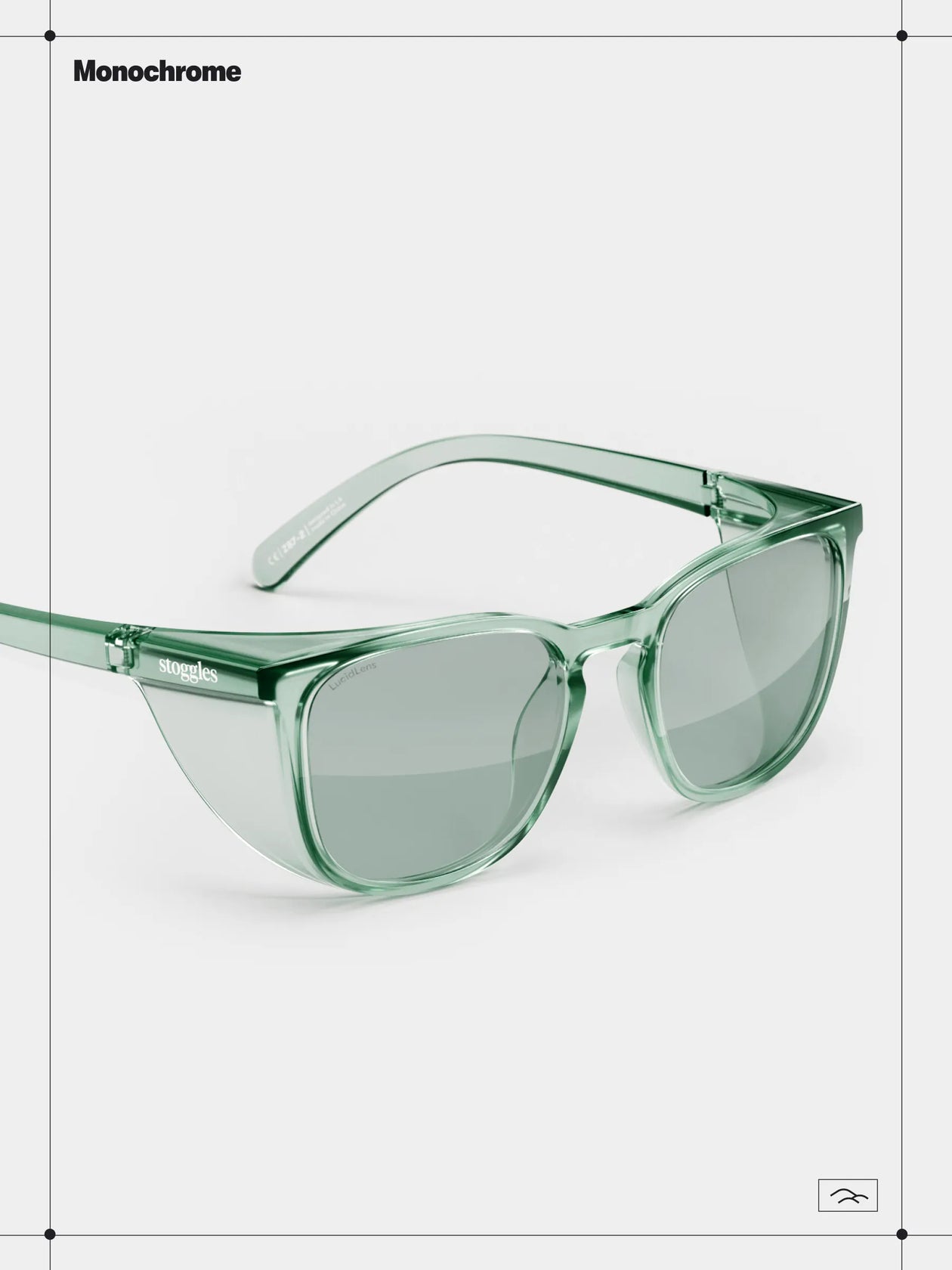
Coverage matters as much as the lens itself. Top and side shields close the gaps that standard glasses leave open, because debris does not always come directly from in front of you. A proper fit keeps the frame close to your face, with no gaps along the sides or top where particles can slip through. Anti-fog coating is not optional either. Glasses that fog up get lifted and adjusted, which defeats the entire point of wearing them.
The Better Long-Term Solution: Prescription Safety Glasses
Contacts plus safety glasses is a workable setup, but it's still two things to manage. Prescription safety glasses eliminate the layering. You get vision correction and certified protection in one pair, with no contact lens fatigue, no absorption risk, and no second item to lose or forget.
Prescription safety glasses built to ANSI Z87.1-2020 standards give you the same coverage as any certified pair, with lenses ground to your prescription. For anyone logging long hours in a demanding environment, the difference in comfort is real. One well-fitted frame worn all day beats managing contacts under safety glasses through a ten-hour shift.
FAQs
Can you wear contact lenses and safety glasses at the same time?
Yes. OSHA permits contacts in most hazardous workplaces as long as you also wear properly fitted protective eyewear. Contacts handle vision; the safety glasses handle protection.
Do contact lenses protect my eyes from debris or chemicals?
No. Contacts only correct vision and form no barrier against impact, dust, or splashes. Soft lenses can even absorb airborne chemicals and trap particles against the cornea.
Is there a better option than wearing contacts under safety glasses?
Prescription safety glasses combine vision correction and ANSI Z87.1-2020 certified protection in one pair, removing contact lens fatigue, absorption risk, and the hassle of layering.
Stop Layering, Start Protecting

Contacts can help you see clearly, but they should never be the thing standing between your eyes and debris, dust, splashes, or impact. If you are relying on safety glasses over contacts every day, the fit, coverage, anti-fog performance, and certification all matter. Stoggles make it easier to wear protection consistently, with ANSI Z87.1-certified impact resistance, built-in top and side shields, anti-fog-coated lenses, UV protection, and prescription-ready options that eliminate the need to manage contacts under protective eyewear.
For a cleaner, safer, all-day solution, replace the contact-lens workaround with Stoggles prescription safety glasses.