
Can Tears Actually Freeze on Your Face in Extreme Cold?

You step outside on a brutally cold morning, and your eyes begin to water before you’ve even reached the end of the driveway. It happens so fast, completely involuntarily, and it raises a question most people have probably never stopped to consider: can those tears freeze on your face?
The short answer is yes, under specific conditions. The more important answer is that extreme cold threatens your eyes in several other ways long before temperatures ever reach that point.
In this blog, we explain whether tears can actually freeze in extreme cold, why winter air makes your eyes water, and how the right eyewear helps protect against wind, fog, and snow glare.
What Tears Are Actually Made Of (And Why It Matters)
Tears are not just water taking an emotional field trip across your face. They’re a surprisingly sophisticated blend of water, salts, proteins, and oils, with each component playing a specific role in keeping the surface of your eyes healthy, comfortable, and well lubricated.
That salt content is directly relevant to the freezing question. Pure water freezes at 32°F (0°C), but dissolved salts lower that threshold—the same principle that makes road salt effective on icy roads. In a sense, your tears come with their own built-in frost protection system. It’s not enough to turn them into windshield washer fluid, but it does make them considerably more resistant to freezing than pure water.
Your tear film also works in distinct layers: an oily outer layer that slows evaporation, a watery middle layer that delivers nutrients, and a mucus inner layer that helps everything adhere to the eye. Cold, dry air quickly disrupts that balance. The eye senses this disruption and responds by increasing tear production to compensate, which is why your eyes often start watering the moment you step into a bitter, cold wind.
Can Your Tears Freeze on Your Face?
Technically, yes. Because of their salt content, tears need temperatures around -13°F (-25°C) or colder before freezing becomes physically possible. That's well beyond what most people encounter during a typical winter, but it's a genuine concern in places like northern Canada or during extreme polar vortex events.
Location matters here. Tears sitting in the eye are warmed by body heat and refreshed by blinking, so they're unlikely to freeze while still in contact with the eye. Tears that have run down onto your cheek are a different situation. That skin surface loses heat fast, especially with wind chill factored in. Wind chill doesn't change the actual air temperature, but it accelerates the rate at which exposed surfaces cool. A calm day at -5°F feels very different from a windy day at the same reading, and that difference matters when your cheeks are wet.
What Happens to Your Eyes in Extreme Cold
Frozen tears on your cheek may sound dramatic, but they’re usually more of a cold-weather curiosity than a medical emergency. What actually threatens your eyes in extreme cold is a different set of problems. Corneal frostbite becomes a real risk when eyes are exposed to very cold, fast-moving air without any protection. Symptoms include blurred vision, light sensitivity, and a gritty or painful feeling that doesn't go away when you blink.
Cold, dry air also strips moisture from the tear film faster than your eyes can replenish it, triggering dry eye symptoms: burning, stinging, and a feeling of dryness even while tears are running down your face. Snow glare adds another layer of risk. Fresh snow reflects up to 80% of UV rays back toward your face, making photokeratitis, commonly called snow blindness, a genuine concern. Contact lens wearers face extra challenges too, since lenses dry out faster in the cold, can trap particles against the eye surface, and become harder to remove safely.
Why Cold Air Makes Your Eyes Water More

The watering is a reflex, not a malfunction. When cold air or wind hits the eye, the trigeminal nerve fires off a protective tear response to flush out the irritant and re-coat the surface. Wind is especially effective at stripping the tear film, which signals the lacrimal glands to produce more tears to compensate.
Here's the irony: your eyes produce more tears in cold air, but those tears evaporate or drain faster than normal, leaving the eye surface just as dry. You end up with wet cheeks and irritated eyes at the same time. If you notice excessive tearing even with a mild cold, or if tearing is accompanied by redness or pain, it may indicate blocked tear ducts or another issue worth discussing with an eye care professional.
How to Protect Your Eyes in Freezing Temperatures
Freezing temperatures affect your eyes in more ways than one. The right eyewear helps block wind, reduce fogging, and protect against winter glare before discomfort becomes a safety issue.
Wrap-Around Coverage and Side Shields
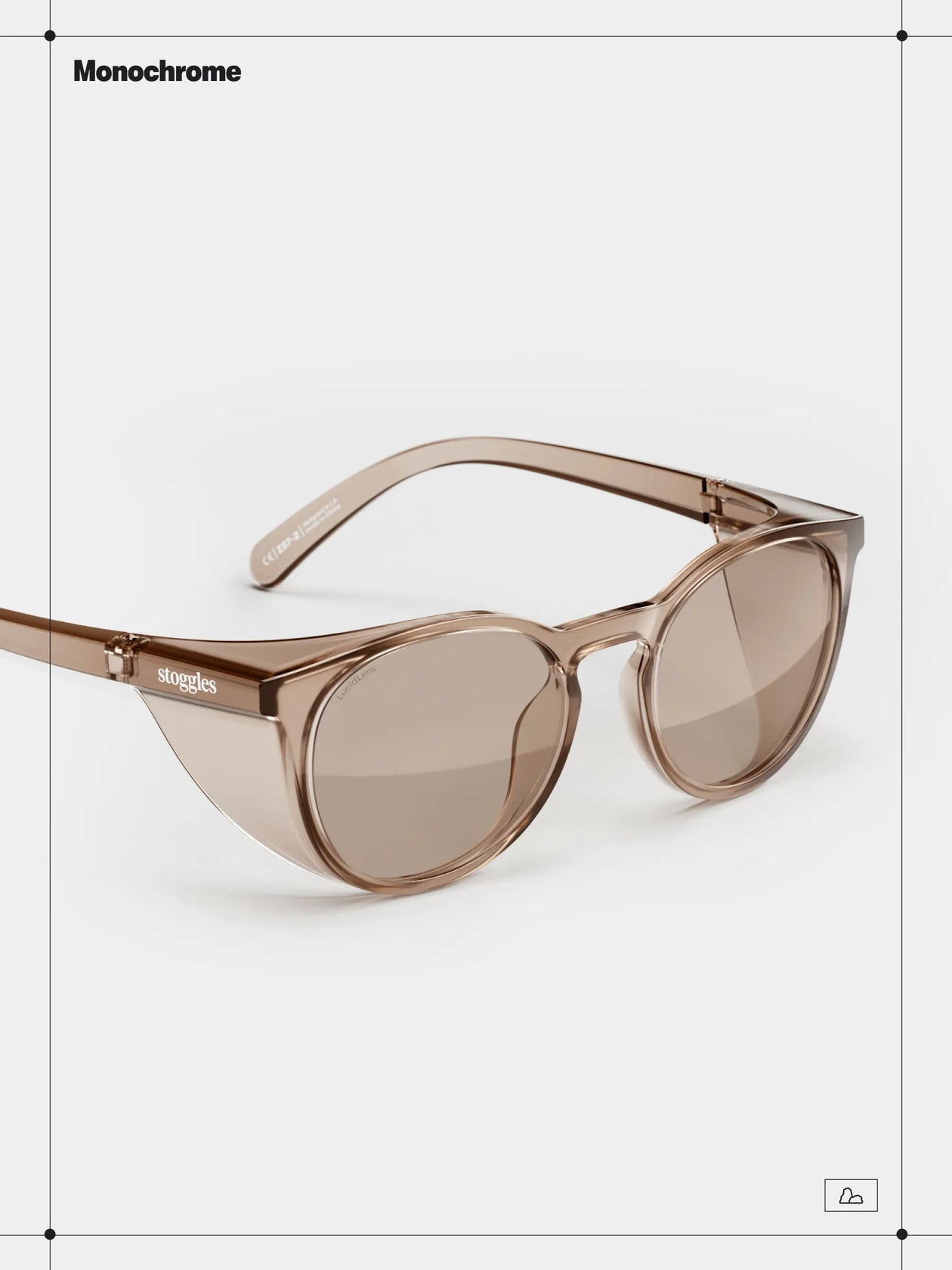
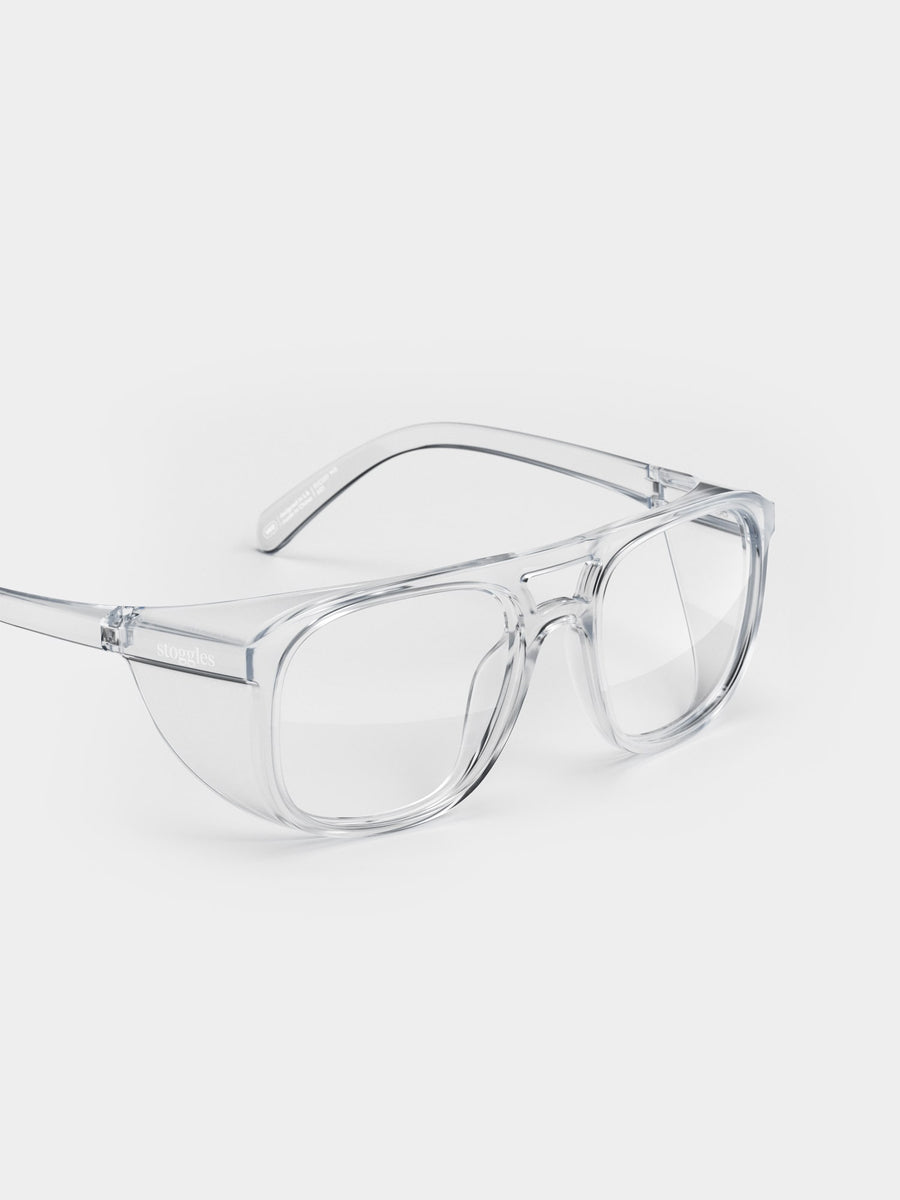
Standard glasses offer almost no protection against cold air. The gaps on the sides and top leave the eyes fully exposed to wind and debris. Eyewear with integrated top and side shields creates a physical barrier that keeps cold air off the eye surface. For anyone working or spending extended time outdoors in winter, ANSI Z87.1-2020-certified eyewear sets the baseline for coverage and impact resistance that holds up in real-world conditions.
Anti-Fog Lenses, More Important Than You'd Think
Moving from cold outdoor air into a warm building or vehicle causes lenses to fog immediately. That's not merely inconvenient. Fogged lenses in any work environment are a genuine safety hazard because you cannot react to what you cannot see. Anti-fog coating prevents moisture from condensing on the lens surface, keeping vision clear through every temperature transition your day throws at you.
UV Protection in Winter
Snow reflects up to 80% of UV radiation, significantly more than sand or water. UV exposure during a sunny winter hike can exceed what you'd get at the beach in summer. Polycarbonate lenses with built-in UV protection block those rays without a separate coating. Overcast days don't eliminate the risk either. UV penetrates cloud cover, and snow glare amplifies exposure even when the sun is not visible.
Cold-weather eye protection comes down to coverage, clarity, and UV defense. When all three are built into your eyewear, winter conditions become much easier and safer to handle.
What to Look for in Cold-Weather Eye Protection

The right cold-weather eyewear brings together impact resistance, UV protection, anti-fog lenses, and side and top shields in a single frame. For people who wear corrective lenses, prescription safety glasses eliminate the need to layer goggles over regular glasses, which can cause fogging, poor fit, and reduced coverage
We built Stoggles to cover all of these needs without the bulk that makes most safety eyewear miserable to wear. ANSI Z87.1-2020 certified, with polycarbonate lenses that include UV and blue-light protection, plus a proprietary anti-fog coating, Stoggles perform in a snowstorm as well as in a lab or on a job site. Eyewear that actually stays on your face is the only eyewear that protects you.
Protect Your Eyes Before the Cold Gets There
Cold air, wind, fog, and winter glare can make eye protection more than a comfort choice. Stoggles are built to help keep your vision clear and your eyes covered with ANSI 21Z87.1-certified protection, anti-fog lenses, UV defense, and comfortable wrap-around coverage that works in real winter conditions. For help choosing the right cold-weather eyewear, contact the Stoggles team.