
Types of Lenses for Glasses: A Plain-English Guide to Every Option You'll Encounter

You step up to the optical counter ready to grab a pair of glasses, and the options unfold like a steakhouse menu where every add-on somehow doubles the bill. Single vision, progressive, high-index, polycarbonate, anti-fog, blue light. It's a lot to sort through. And the lens you land on shapes your comfort, your clarity, and how well your eyes hold up down the road.
Pick wrong, and you'll squint, strain, or go unprotected when it counts. In this guide, we'll walk through lens types by vision correction, the materials behind them, and the coatings that make your day smoother.
Why Your Lens Choice Matters More Than You Think
Your lenses do more than perch on your nose. They decide how sharp the world looks, how your eyes feel after a long shift, and whether an afternoon of screens leaves you with a headache. Grab the wrong pair, and you're dealing with eye strain, blurry edges, or that constant nudge back up your face.
Safety plays in here too. The CDC estimates around 800,000 eye injuries happen in the U.S. every year, and most get prevented with the right gear. A lens built to take a hit can mean the difference between a close call and a trip to urgent care. That's where protective lenses earn their spot.
Lens Types Based on Vision Correction

Start with what your prescription asks for. Here are the main options you'll bump into.
Single Vision Lenses
One correction across the entire lens, tuned to a single distance. If you're nearsighted or farsighted, single vision keeps things simple and clear. It's the go-to for good reason.
Bifocal and Trifocal Lenses
Bifocals split near and far into two zones with a visible line marking the switch. Trifocals toss in a middle zone. Plenty of people still reach for these because they're straightforward on the wallet.
Progressive Lenses
Progressives glide from distance up top to reading at the bottom, with no line cutting across the lens. You get several corrections in one clean look, which is why many wearers swear by them.
Single Vision vs Progressive Lenses: Quick Comparison
-
Cost: Single vision runs cheaper. Progressives cost more because they combine multiple prescriptions into one seamless lens.
-
Adjustment: Single vision feels natural right away. Progressives take a week or two to adjust to.
-
Lifestyle fit: Need one clear distance? Single vision. Bouncing between reading and driving? Progressives win.

Lens Materials: What Your Lenses Are Actually Made Of
The material behind your lenses shapes weight, durability, and how safe they keep you. Here's the rundown.
Glass Lenses
Glass gives you sharp, clear vision, but it's heavy, and it shatters. That mix makes it a hard sell for anyone who moves around.
Plastic (CR-39) Lenses
CR-39 plastic is light, affordable, and the everyday standard. Fine for daily wear, though it won't win any toughness contests.
Polycarbonate Lenses
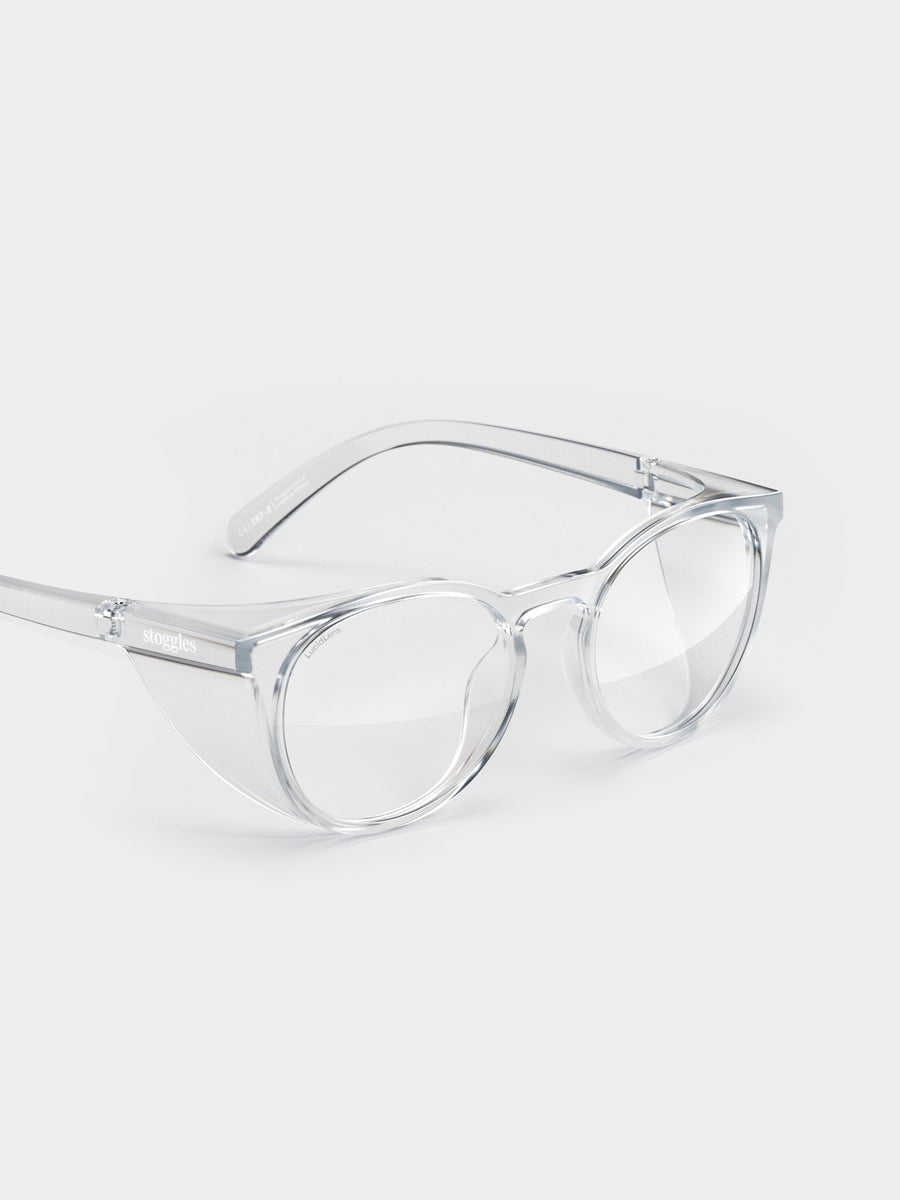
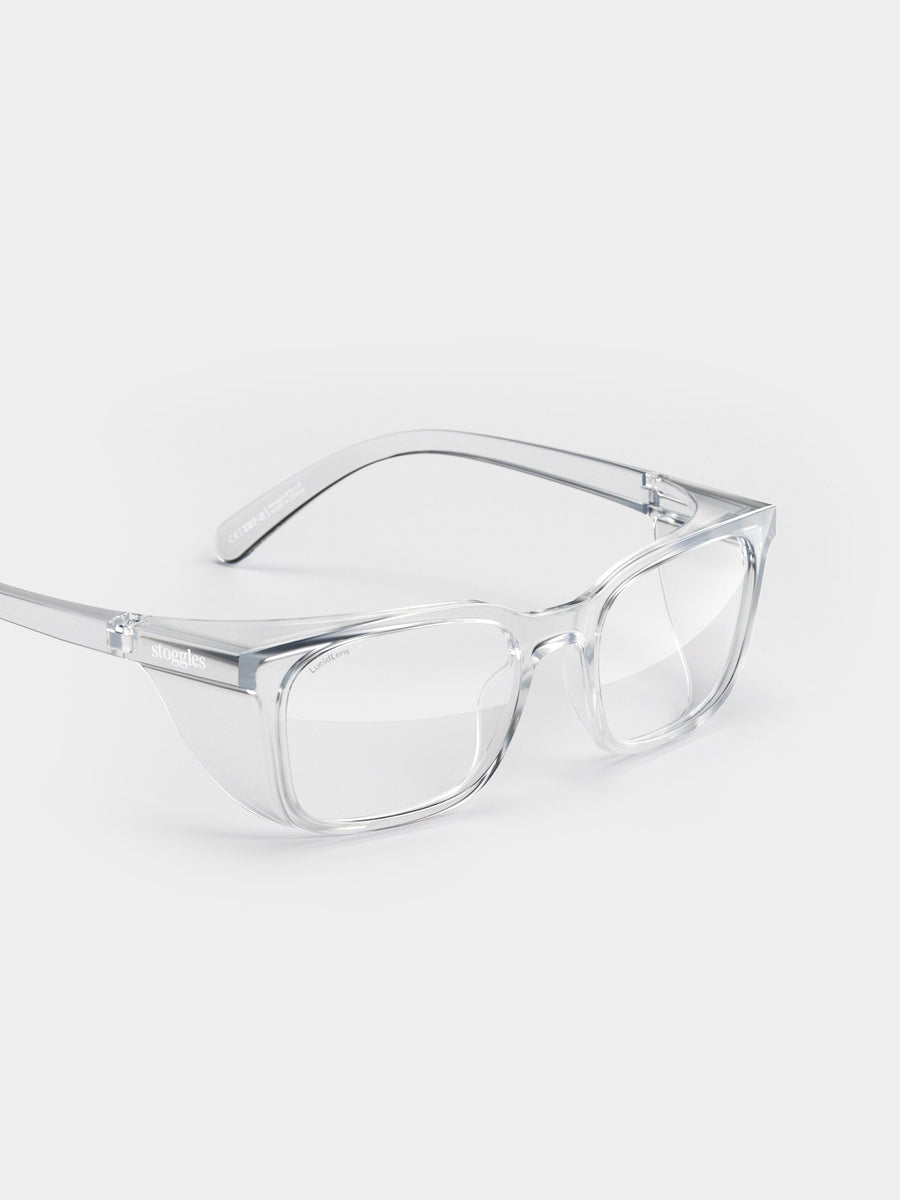
Polycarbonate offers real impact resistance, which is why it's used for active and safety applications. We build every pair of Stoggles with polycarbonate, so your eyes stay covered without the bulk.
High-Index Lenses
Got a strong prescription? High-index lenses bend light more, so they stay thin rather than becoming thick, heavy discs.
Polycarbonate vs Glass Lenses: Which Wins for Safety?

When safety's on the line, this one isn't a fair fight. Polycarbonate is lighter, tougher, and far harder to shatter. Glass looks nice on a shelf, but drop it or catch a flying object, and it breaks into sharp pieces near your eyes.
For labs, DIY jobs, and sports, glass breaks down quickly. Polycarbonate meets the ANSI Z87.1-2020 standard, with certification proving eyewear can withstand real impacts. Glass rarely earns that stamp. Now, if you spend all day at a still desk with zero flying-object risk, glass clarity has its place. For most of us, polycarbonate is the smarter pick.
Lens Coatings and Treatments Worth Knowing
Coatings change how your lenses hold up day to day. Here are the ones worth asking about.
-
Anti-reflective: Cuts glare and eases screen fatigue.
-
Scratch-resistant: Keeps lenses tough through daily wear.
-
UV protection: Shields your eyes from the sun outdoors.
-
Anti-fog: Keeps your vision clear when everyone else is wiping their lenses.
-
Blue light protection: Comfort for screen-heavy days.
Instead of picking one and paying extra for the rest, Stoggles bundles anti-fog, UV, and blue light into every lens. One pair, all three, no upsell.
Specialty Lenses for Specific Needs
-
Photochromic lenses: Darken in sunlight and clear up indoors, so one pair covers both.
-
Polarized lenses: Knock out harsh glare from water and roads; great for driving and fishing.
-
Prescription safety glasses: Correct your vision and protect your eyes in one frame, no balancing goggles over your regular glasses.
Which Lens Type Is Right for Me?
Your lifestyle points you to the answer. Here's a quick match-up.
-
Strong prescription: High-index keeps lenses thin and light.
-
Kids and active folks: Polycarbonate handles the bumps and drops.
-
Screen-heavy work: Look for blue-light protection to reduce fatigue.
-
Outdoor, lab, or job-site work: Put impact resistance and UV protection first.
Most people land in more than one bucket, and that's fine. The point is matching the lens to how you live.
FAQs
Are polycarbonate lenses worth it?
Yes, they're lightweight and far harder to shatter than glass or standard plastic.
Can I get prescription safety glasses?
Absolutely, with Stoggles, so you can skip stacking goggles over your regular glasses.
Do all lenses block blue light?
No, only certain coatings do, though Stoggles builds it right into the lenses.
Choose Lenses Built for Your Actual Day
The right lenses shouldn't stop at helping you see clearly. They should hold up to your work, your screens, your time outside, and whatever else the day throws your way. Stoggles combines prescription-ready eyewear with impact-tested polycarbonate lenses, anti-fog performance, UV protection, and comfortable frames made for everyday wear.
Stop settling for lenses that solve only half the problem and find the Stoggles that fit your vision and your day.